


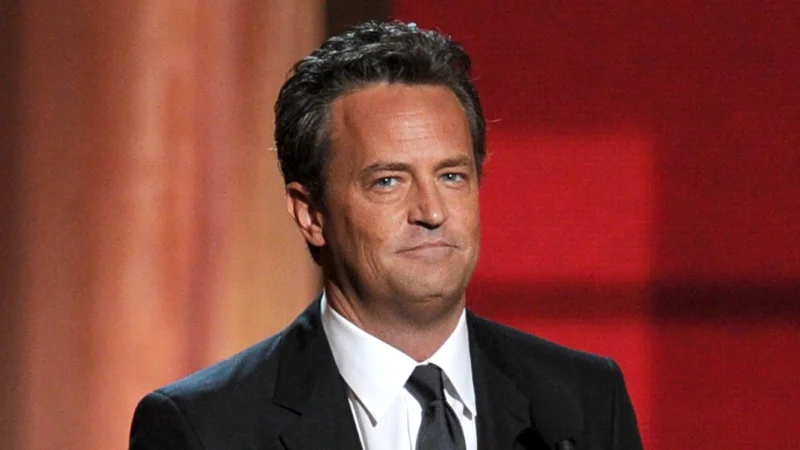
Kenneth Iwamasa, Matthew Perry's live-in assistant, is set to be sentenced on Wednesday as the final defendant in the case tied to the Friends actor's 2023 death. Prosecutors say Iwamasa repeatedly injected Perry with ketamine in the weeks before the death without proper medical training, then gave him the fatal dose on Oct. 28, 2023.
Iwamasa pleaded guilty in August 2024 to one count of conspiracy to distribute ketamine resulting in death and faces up to 15 years in prison. Prosecutors have asked for 41 months, or about 3 1/2 years, while defense lawyers say he was acting at Perry's direction rather than on his own. The sentencing closes the chapter for one of five people charged and convicted in what prosecutors described as a conspiracy to illegally distribute ketamine to Perry.
Prosecutors said Iwamasa was hired as Perry's live-in personal assistant knowing the actor had struggled with drug addiction for most of his life, but that he became Perry's enabler and drug supplier instead. They said he injected Perry with significant quantities of ketamine in the days leading up to the death, including two doses on the day Perry fatally overdosed. He also found Perry unconscious inside his home at least two times in October 2023, according to prosecutors.

The government's account paints a scene that was both frantic and repetitive. Prosecutors said Perry asked Iwamasa to prepare the jacuzzi and to shoot me up a big one, then said Iwamasa left to run errands after administering the third dose and returned to find Perry dead, face down in the jacuzzi. They also said Perry froze up after a large injection and that Iwamasa kept injecting him with illicit ketamine after seeing warning signs that he was in danger.
After Perry's death, prosecutors said Iwamasa cleaned up ketamine bottles and syringes from the scene, omitted ketamine from the list of Perry's medications while being questioned by officers after calling 911, and took other steps to cover his tracks and obstruct justice. They also said he provided significant cooperation in the investigation, including information on other defendants.
The case has centered on how Perry's ketamine use escalated through a chain of access and dependency. Prosecutors said Iwamasa worked with two doctors to obtain ketamine before turning to two dealers to obtain dozens of vials. In court filings, his defense argued that his relationship with Perry may have made participation easier, but did not make him uniquely responsible, writing that multiple third parties were involved who did not share the same relationship with the victim. Wednesday's hearing leaves one blunt question answered: the man who was closest to Perry when the drugging happened is now the last to be sentenced for it.
