


Craig Fitzgibbon had a captain to find for Cronulla’s clash with Canterbury at Magic Round, and he settled on the player few opponents would want steering the ship. With Blayke Brailey out because of concussion and Cam McInnes sidelined by an ankle injury, Fitzgibbon turned to Addin Fonua-Blake and gave him the job on the night.
Before the game, Fitzgibbon told Fonua-Blake, “I need a captain’s knock from you tonight, and to keep talking to the boys.” Fonua-Blake’s answer was simple: “No dramas, coach. Leave it with me.”
The decision fit the way Cronulla have come to view him. Fitzgibbon said Fonua-Blake is often in his office with a notebook, scribbling down ideas and talking through all things footy. He leads the kick chase, he makes try-saving tackles, and he delivered one against the Bulldogs at Magic Round. Those are not the habits of a prop who only turns up for the collision.
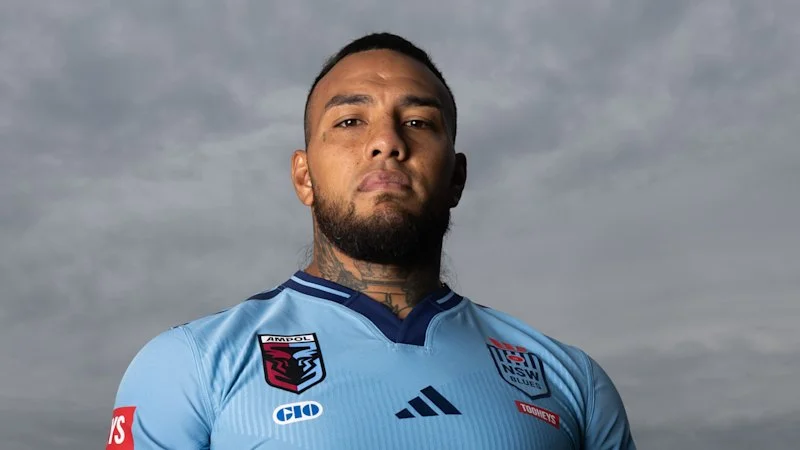
That is also why his voice carries beyond club football. Fonua-Blake was selected for New South Wales under the NRL’s new eligibility rules this week, adding another layer to a career that has been shaped by both force and responsibility. Kristian Woolf had already seen that in international football when he elevated Fonua-Blake to captain of Tonga after Jason Taumalolo was unable to travel to England for a series at the end of 2023.
Woolf first met him in Tonga camp in 2017 and said he likes his presence in the group, adding that when Fonua-Blake has extra responsibility, he puts pressure on himself to play at his best and wants to lead from the front without letting anyone down. The frame matters because it cuts against the idea that he is simply an intimidating front-rower. At 80 minutes, he can still set a standard with effort as much as size.
Haumole Olakau'atu, who knows exactly how opponents read a heavy hitter, put it more bluntly: “I don’t know why I got that title – Addin is definitely scarier.”
Fonua-Blake’s path to this point has not been neat. He played for Manly and formed a dominant front-row combination with Marty Taupau before joining the Warriors amid rumours that he needed to escape Sydney. He later said stories that “some bikies were after me” were “news to me.” What followed was a productive run in New Zealand, where he helped turn the Warriors into a success before wanting to head home to Sydney.
That history matters because it shows why Cronulla trusted him when they had to improvise. Fitzgibbon did not simply choose the biggest name left standing. He picked a player he believes others already follow, someone who talks, works and absorbs responsibility without needing the badge to prove it. On a day when Cronulla lost two established leadership options, Fonua-Blake looked like the readymade answer.
The bigger question now is whether this week’s NSW call-up and his growing authority at club level point to a more permanent shift in how he is seen. He has spent enough of his career being judged by the chaos around him. At Magic Round, the clearest story was the one he wrote himself: a front-rower handed the armband, asked to steady a side, and answering in the only way Fitzgibbon wanted.
