


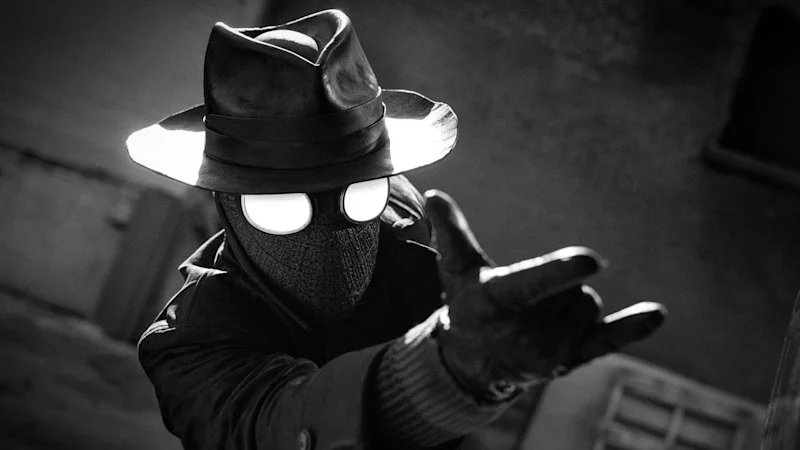
Prime Video’s Spider-Noir opens like a cracked old case file: Nicolas Cage plays Ben Reilly, a former web-slinging hero turned private investigator who is hired to track down a man called Addison, only to be pulled into a city where people can vanish, burn or turn to sand. The series, which draws on hard-boiled fiction and films of the 1940s, is filmed in black and white and then digitally colorised, with viewers able to choose which version they want to watch.
Cage is not revisiting the same spider character he played in 2018’s Spider-Man: Into the Spider-Verse. Here, Reilly is the man who once kept New York safe as The Spider, then hung up his mask five years ago after failing to save the woman he loved from death. When Spider-Noir begins, that past is still hanging over him as he takes the Addison job from an unseen client.
The series gives that opening case an immediate charge. Addison can turn himself into a human torch and set fire to everything in his path, and another gumshoe hired by an unseen client shoots him in the chest. At the same time, Ben is drawn into a second missing-person mystery when Cat Hardy hires him to find Flint Marko after he disappears. Flint, played by Jack Huston, serves as Hardy’s bodyguard and appears to turn into sand when riled.

That is the engine of the show: a detective story where every answer seems to come wrapped in smoke. Li Jun Li plays Cat Hardy, while Brendan Gleeson takes the role of Silvermane, the gangster at the centre of the story. The setup keeps the focus on Reilly as much as on the city around him, and it makes the noir framing more than a style exercise. This is not a standard superhero series with a few shadows thrown over it; it is built as a noir homage first, with Marvel iconography folded into the detective tale.
The black-and-white presentation does more than signal period mood. It underlines how closely the series wants to follow the rhythms of 1940s crime fiction, right down to the shady dames and clipped, wary tone that come with the territory. One reviewer summed it up as “all smoke, shady dames and black and white cinematography,” calling Marvel’s latest Spidey offering fast, witty and confident. The option to switch to color does not cancel the effect; it gives viewers a second way to read the same world.
What matters now is that Spider-Noir is not asking Cage to play another familiar comic-book variation. It puts him in a broken, older role, one shaped by failure, regret and the kind of client work that keeps a detective moving even when he would rather stand still. If the series holds to that idea, then the answer to its main question is already clear: this is a superhero story about what happens after the hero has put the mask away, and about whether a city like this ever lets him leave it behind. For more on the series rollout, see Spider Noir Release Date Set for Nicolas Cage’s Depression-Era Thriller.
