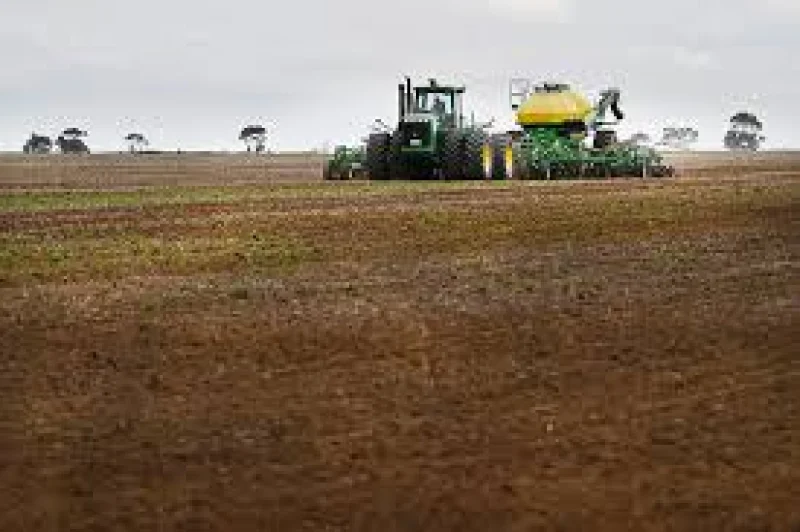
Weekend rain brought a welcome break to drought-hit parts of western Victoria, with sustained falls across the Wimmera, Grampians and southern Mallee on May 16 and 17. Matthew Sparke said the rain had improved soil moisture and given growers a lift just as early crops were beginning to emerge.
The Bureau of Meteorology recorded more than 20mm at several locations on May 17, including Horsham, which had 23.8mm, Nhill with 21.6mm, Stawell with 23mm and Hopetoun with 27.2mm. Ararat received 18.4mm and Edenhope 12.2mm on May 17, while Edenhope also picked up 3.6mm on May 16 for a weekend total of 15.8mm. Sparke said the falls were especially useful after a hot, dry summer and a start to March that finally brought rain, though conditions still vary sharply from farm to farm.
“We’ve got some early oats and forage crops up, and they’re looking pretty good. Vetch is generally looking pretty good,” he said, adding that some growers were already looking at nearly a full soil profile while others were closer to half a profile. That difference matters because the region entered autumn after a summer that was “a little bit hit and miss,” leaving some paddocks with far less stored moisture than others.
The fresh rain also arrived as growers were finishing their programs and trying to lock in what they had done before crops got away. Sparke said the weather had given producers a confidence boost after a spell of uncertainty tied to high nitrogen-fertiliser prices. “You can’t not be optimistic with a nice break and the beautiful weather we’ve had,” he said. “The days have been glorious – it’s nearly April temperatures in May, so crops are jumping away.”
That optimism is tempered by a stubborn weed problem that has spread across Victoria’s winter cropping region. Glyphosate-resistant ryegrass remains a major concern, and Sparke said there had been a lot of paraquat used this autumn to get it under control. “That’s been a major concern. There’s been a lot of paraquat used this autumn to get that ryegrass under control,” he said. For now, the rain has helped crops more than weeds, but growers will need to keep watching paddocks closely as the season settles in.
Sparke said more rain in late May or early June would be the best outcome for farmers, especially after the dry run into the season. “Hopefully we get another rain late in the month, which would make it a glorious month, or early in the new month,” he said. His read on the moment was simple: the weekend rain did not solve the season, but it gave the region a real start.
“Now for growers it’s about getting the crop in and then getting back and monitoring their crops for pests and grass weeds, obviously ryegrass being our major issue,” he said.