


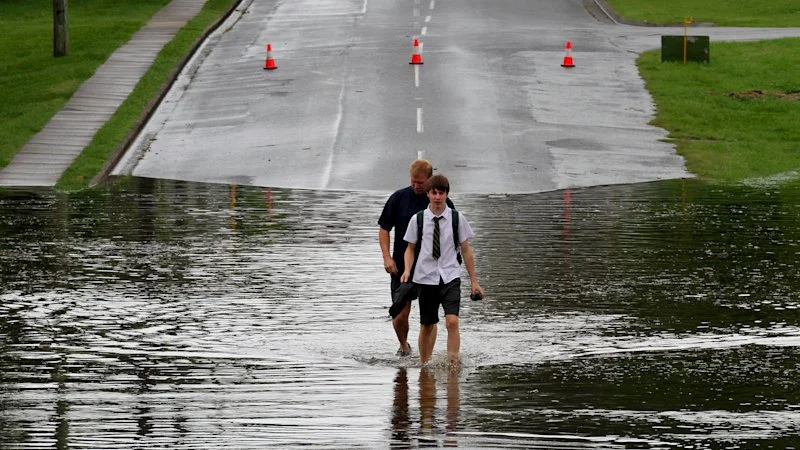
Heavy rain and storms hit Brisbane on Wednesday, with flash flooding also predicted as a large, complex low-pressure system fed the city with more moisture and kept the wet weather moving slowly across south-east Queensland.
Ben Domensino said the upper-level system was passing rather slowly over the region and was being boosted by a steady feed of air from the tropics and moisture evaporating from the abnormally warm Tasman Sea. That, he said, was creating a conveyor belt of moisture, also known as an atmospheric river. Atmospheric river systems are not unusual in autumn and winter, but Domensino said it was unusual to see one stick around for so long. This week’s system, he said, appeared in no hurry to go anywhere fast.
The timing matters because Brisbane has barely had a chance to dry out. Last Monday, a massive cloudband dumped about 60 millimetres of rain on the city in 24 hours, flooding roads across Brisbane and bringing trains to a halt on three major lines. The Gold Coast was hit even harder, with nearly 200 millimetres falling over the region, enough to break a 20-year rain record for the month. Hundreds of calls for help were made to the State Emergency Service on the Gold Coast, and a group of students on a school camping trip was stranded there.
The latest rain has already pushed Brisbane to double its monthly average before the next round of wet weather arrives. The city’s average May rainfall is 69.2 millimetres, and it is now on track to record its wettest May since 2022, when 280 millimetres fell over the month. That puts the city well beyond the kind of May residents usually expect, with autumn more often bringing crisp mornings, blue skies and milder conditions.
Christie Johnson said there was a chance of hail on Thursday for parts of Brisbane, and warned that large hail or damaging wind gusts were possible if the biggest storms developed. She said heavy rainfall was the most likely severe hazard. “We’re already double the monthly average, and then we’re expecting more again,” she said, underscoring how little room there is left in a month that has already been unusually wet.
The question now is not whether Brisbane has had enough rain, but how much more it can take before the current system finally shifts. With the atmosphere still loaded and the ground already soaked, the next round of storms is likely to deepen the disruption before the month is out.
