


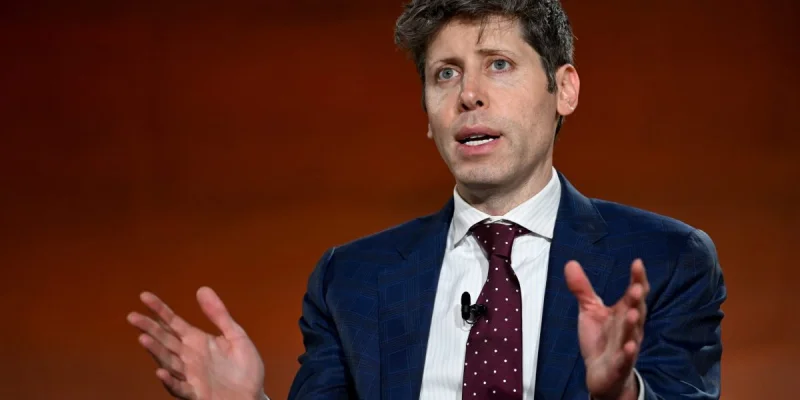
OpenAI CEO Sam Altman said on Tuesday that he was “pretty wrong” about how fast artificial intelligence would hit the labor market, backing away from a warning he issued in June 2025 that entry-level roles were at serious risk.
Altman said he had expected more damage by now to entry-level white-collar jobs, but the layoffs and elimination he feared have not materialized at the pace he predicted. “I’m delighted to be wrong about this,” he said, adding that he had come to the view after trying to hand off his Slack and email replies to AI and then choosing to answer them himself.
“We really do care about our interactions with people,” Altman said. “This thing…is not something that I can imagine myself outsourcing to an AI anytime soon. It really updated me to thinking that the jobs picture is likely to be very different than we thought.” That shift matters because Altman was among the most prominent executives warning that AI would reshape work quickly, and his new tone is a retreat from the sharper public alarm that helped define the debate over automation this year.

Altman’s comments also narrow the gap with another major figure in the AI race. Anthropic CEO Dario Amodei had previously said AI could eliminate 50% of white-collar jobs, but he later argued that automation may expand the work people do instead. Earlier this month, Amodei said that if a system automates 90% of a job, then people may end up doing the remaining 10% — and that the 10% can grow until it becomes 100% of what people do and lifts productivity 10-times. The shift from warnings of mass disappearance to a more elastic view of work is notable because both companies are reportedly preparing to launch IPOs this year, each with an estimated valuation of $1 trillion.
That financial backdrop makes the change in tone harder to dismiss. A company chief who is trying to explain the limits of automation is also speaking for one of the most valuable private tech businesses in the world, and investors are watching the labor story as closely as the product story. The same is true for Anthropic, whose executives have also moved from stark forecasts to a more measured case that AI may change jobs more than erase them. Even the language is softening: a year ago, Altman said on the Uncapped podcast that a lot of jobs would go away, but on Tuesday he said he now sees more room for new work than he expected.
Goldman Sachs CEO David Solomon offered the clearest counterweight to the panic. He said the United States has a long track record of creating new jobs in response to disruption and that he saw no reason to think that dynamic would stop now. Solomon said civilian U.S. employment has grown 145% since 1962, and he pointed to Goldman Sachs research showing that data center construction has added 200,000 jobs since 2022. The argument lands at a moment when the industry is still selling AI as both a productivity engine and a capital-heavy buildout that needs people as much as code.
For workers, the immediate question is not whether AI will change jobs — it already is — but whether the next wave will create as much as it destroys. Altman’s own answer suggests the industry’s loudest warnings are becoming less certain, even as the money, the valuations and the IPO plans keep rising.
