


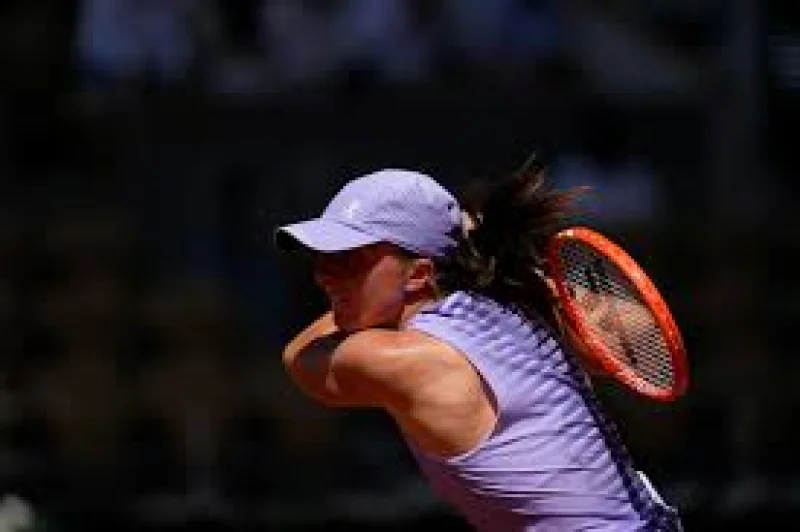
Day 2 at the French Open was played in punishing heat that held at 91.4 degrees well into the evening, and the conditions showed up everywhere on court. Players reached for ice bags during changeovers, a ballkid needed help after feeling dazed at the end of a point in Andrey Rublev’s win over Ignacio Buse, and Casper Ruud was pushed to five sets after serving for the match against Roman Safiullin and then watching the lead disappear.
The temperature mattered because it changed the tennis. Hot air is less dense, so shots can travel faster, while the ball itself expands slightly in the heat, raising pressure inside it and making it bounce higher. For players trying to control that, the margin got thin. As Iga Świątek put it, when she arrived in Paris in cooler weather, the balls felt heavier; in those conditions, she said, a player could put full power into the shot and still feel in control of it. On Day 2, that did not sound like the same sport.
The strain was visible beyond the scoreboard. Roland Garros also introduced digital boards above the walkways around the complex, giving fans real-time updates on how full each court was for the first time at the tournament. That fit the day’s mood: a major event, but with early-round matches sometimes unfolding on smaller courts with the feel of a modest club setting rather than a grand slam showcase. Nawfel Barah said the heat was not ideal for tennis life, and Romuald Pattier added that it was harder for the players than the fans.
Ruud’s victory carried the sharpest edge. The No. 11 seed was two sets up and serving for the match against Safiullin before the momentum flipped and he dropped the next two sets. He recovered quickest after Safiullin experienced physical issues, then closed it out in five sets. For a five-time quarterfinalist, it was the kind of escape that keeps a tournament alive even as it drains the legs.
There was more warning than comfort in the rest of the draw. Anna Bondár nearly beat Elina Svitolina for the third consecutive match at the French Open, a reminder that even established names can be dragged into tight, repetitive battles this early. And with the heat expected to keep shaping the bounce, the pace and the margins, the second round already looks like a test of survival as much as form.
