


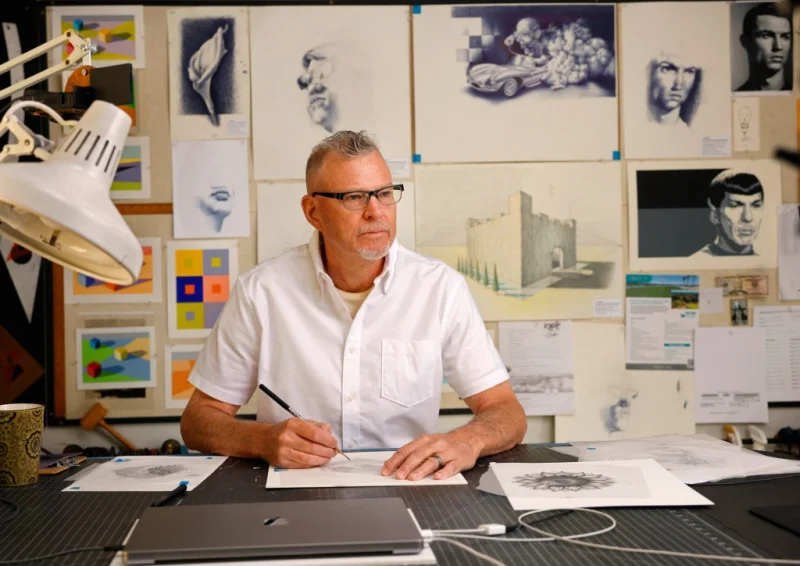
Chris Polentz thought little of it when he applied to the U.S. Mint’s Artistic Infusion Program three years ago. He sent in samples of his art, filled out the paperwork and moved on. Then the mint called back with news that put him on a team of more than 30 artists from across the country helping create designs for U.S. coins.
“We are recording American history on coins and medals,” Polentz said. For an artist who had not expected to be selected, the assignment quickly turned from curiosity into responsibility. He said, “I was surprised that I had actually been selected. My work is not what I would call mainstream.”
Before anyone began sketching for the mint, Polentz and the new designers were flown to Philadelphia for a four-day educational symposium that covered the history of American coin design and the strict requirements a design has to meet to be considered mintable. The United States has used its coins to tell its story since the mint began in 1792, and the workshop was meant to make clear that these are not ordinary illustrations. They are federal objects, built to last, pass through millions of hands and carry national symbolism in a very small space.
Polentz’s first assignment, the 2025 American Liberty High Relief Gold Coin, took about a year and a half to develop and was minted last year. His design paired a sunflower with a honey bee, an image he said represented “a living partnership, each necessary for one another’s survival, as is the case with our democracy.” He also said the Fibonacci Sequence appears in the sunflower’s seeds, adding another layer to a piece meant to balance symbolism with precision.
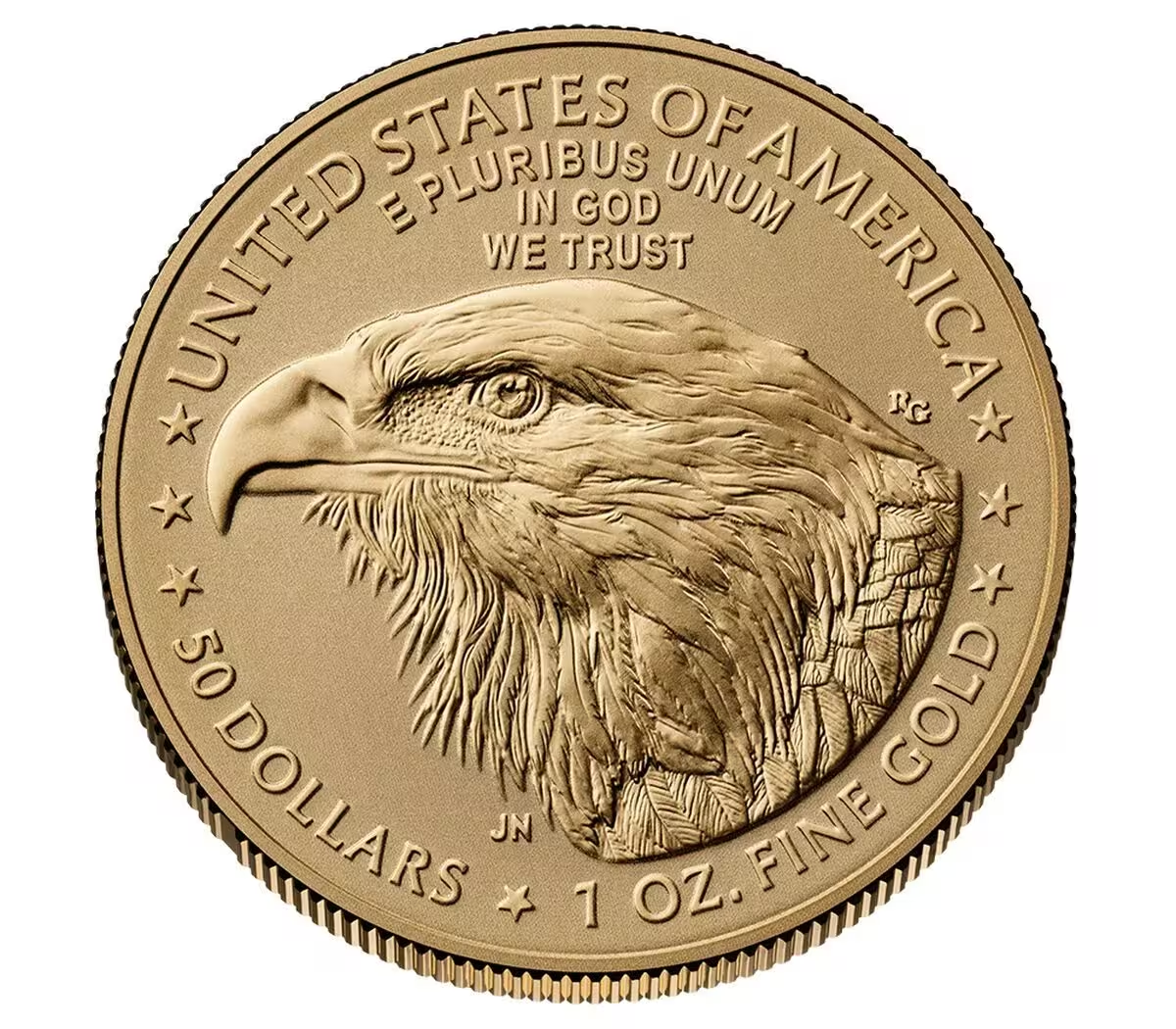
The process, he said, is not quick or casual. “It is quite an involved process,” Polentz said, and he described the pressure that came with producing his first designs for the mint. “Being selected to work on these historic projects is a once in a lifetime opportunity and very exciting, but afterwards reality set in and the work began. These were my very first designs for the mint. I felt a lot of pressure, or maybe I put it on myself, wondering if I was really qualified and could I deliver?”
That pressure appears to have been justified. His design was chosen as one of the top 100 Coin of the Year designs worldwide for 2025 and landed in the top 10 in the Best Gold Coin category. The competition drew 600 submissions from mints, banks and collectors around the world, putting Polentz’s work in a field that stretched well beyond Washington and Philadelphia.
There is also an element of surprise in how the coin came together. Polentz said, “I run many ideas through my head, most of them are not all that great. At some point in time I have to decide on something, and then run with that.” He said the swirling eagle on the reverse came to him without a clear starting point. “I really don’t know where that came from either,” he said. He wanted something “powerful” and “aggressive,” with a modern feel, rather than a literal portrait of the bald eagle.
The larger story here is that the mint’s artist pipeline is doing exactly what it was designed to do: pull in voices outside the usual circle and turn them into contributors to national imagery. The Artistic Infusion Program drew more than 30 artists from across the country, but only one design is selected for a coin. For Polentz, that made the first call, the first symposium and the first finished coin part of a rare sequence that now carries a public measure of success.
For the mint, the outcome is another reminder that its work is not just technical. It is cultural. And for Polentz, the assignment that began with a forgotten application has become something much bigger than a single piece of gold. It is a place in the long chain of images that the United States has chosen to put into circulation since 1792.
