


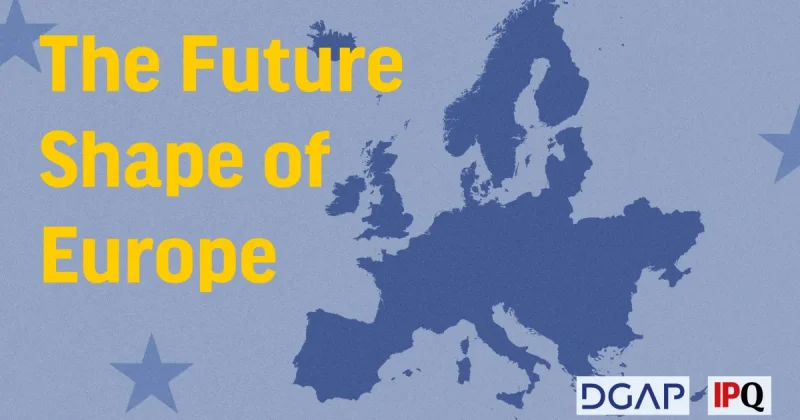
The European Union looks sluggish and incapable of reform, and that judgment is now shaping how its leaders work around it. Instead of waiting for all 27 member states to agree, small groups are testing exclusive formats that can move faster, even if they leave the wider bloc behind.
The shift reflects a harder mood in Europe. Since at least 2022, Europeans have been mainly focused on self-preservation and on defending the continent from outside threats, a change that Berlin has described with the words “turning point” and “epochal break.” Olaf Scholz, Germany’s chancellor at the time, pushed the term Zeitenwende into the security debate after Russia’s full-scale invasion of Ukraine. His successor, Friedrich Merz, has inherited a continent that talks more about resilience than about grand design.
Brussels is answering that reality with a new pragmatism. The priority now is often to deepen integration where possible rather than wait for every member state to come on board. That is the logic behind a growing set of small, exclusive formats: the Visegrád 4, the Nordic-Baltic 8, Weimar, E3, E5, E6 and E8. The Weimar format, which brings together France, Germany and Poland, is now often expanded to include Ukraine as well.
These groups are not trying to reinvent the European Union in one sweep. Most of them are built around narrow cooperation on technical issues, such as combating disinformation or strengthening air defense. They can help governments coordinate faster, but they do not answer the bigger questions that have haunted European integration for years, including whether the bloc should ever move toward a federal state.
That gap matters because the founding myth of the European Union is fading. The old promise was that deeper unity would come through broad consensus and shared purpose. In practice, repeated attempts at reform have stalled or failed. Emmanuel Macron set out his vision for Europe in a first Sorbonne speech in 2017, then launched the European Political Community in 2022. It has not yet produced results. A Franco-German expert group produced reform proposals in 2023. Reports by Mario Draghi and Enrico Letta were discussed in 2024 and never implemented. The Conference on the Future of Europe also failed to deliver the kind of political momentum its backers wanted.
That is why the new mini-lateral forums are multiplying. They are a response to the repeated inability to get all member states on board, and they offer a way to act without reopening the entire constitutional argument. But the tradeoff is clear: the more Europe relies on clubs within the club, the harder it becomes to defend the idea that the European Union itself is still the main engine of common purpose. The continent may be safer in the short term, but its larger political story is getting thinner by the year.
