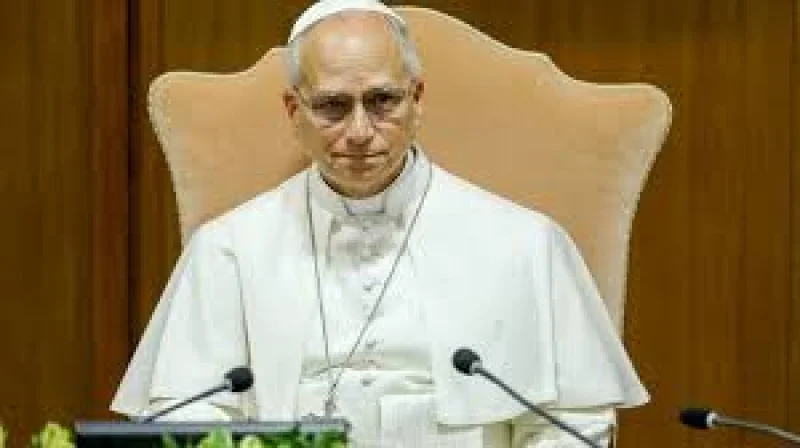
Pope Leo presented his encyclical himself on Monday at the Vatican, using the moment to warn that artificial intelligence is being propelled by a culture of power and must be subjected to the most rigorous ethical constraints. The document, called Magnifica Humanitas, is the first major text on safeguarding humankind of his papacy.
Leo said AI is already infiltrating everything from work to war, and called for it to be “disarming.” He wrote that some autonomous weapons systems are now practically beyond any human reach to control, and warned that warfare powered by AI must be held to the most rigorous ethical limits to protect human dignity and the sanctity of life and to avoid a race to develop such arms. He also said power over digital systems, infrastructure and data no longer rests with states but with major economic and technological actors, and that concentrated power in the hands of the few tends to become opaque, evade public oversight and deepen exclusion, manipulation and inequality.
Christopher Olah, a co-founder of Anthropic, attended the Vatican event and backed the call for broader oversight from religious leaders, governments and civil society. Olah said AI development cannot be left solely to technology companies, adding that there was “a real possibility” it could displace human labour “at very large scale” and that supporting people pushed aside by the technology would be “a moral imperative of historic proportions.”
The papal warning lands against a backdrop of rising concern over how fast AI is moving into military systems and everyday life. Encyclicals are among the highest forms of teaching a pope can offer the Catholic church’s 1.4 billion members, and Leo has made AI a central concern since May last year, when he said he considered it the biggest threat to humanity today. The Vatican setting also gave added weight to his argument that technology should serve human dignity rather than overwhelm it.
Leo tied that warning to the church’s own history, saying its delay in condemning slavery was “a wound in Christian memory” and describing the digital economy as creating “new forms of slavery.” That language reflected the broader theme of the encyclical: not simply fear of machines, but fear of systems that concentrate power, weaken accountability and make human life easier to control. Leo’s family history includes both enslaved people and enslavers, giving the warning a personal edge as he framed AI as a moral test for the age.
The immediate question is whether his appeal will move beyond the Vatican walls. Olah’s presence suggested at least some leaders inside the industry accept that the future of AI cannot be left to companies alone. But Leo’s critique of concentrated power, and his call to disarm AI, places the burden on governments and institutions to decide whether they can regulate a technology already moving faster than the rules meant to contain it.