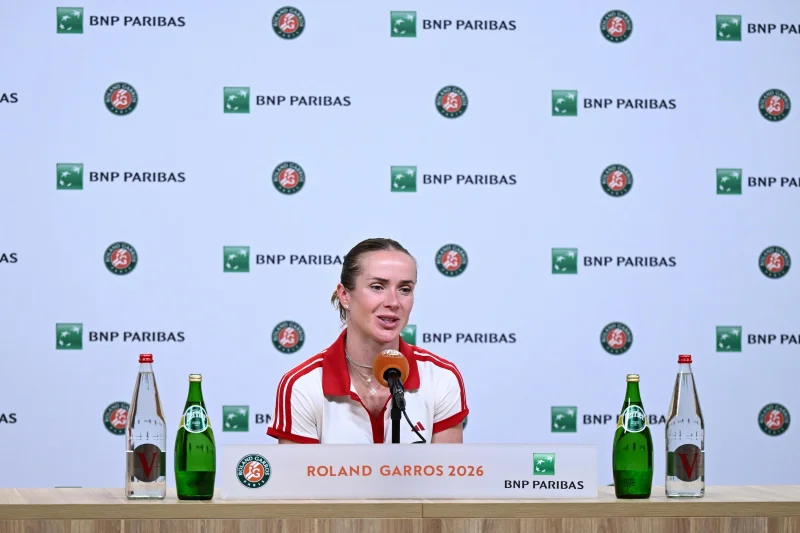
Elina Svitolina opens her French Open campaign against Anna Bondar on Day 2 of the women’s singles draw, one of 24 first-round matches on a packed slate at the season’s second Major. The matchup is part of a full day of predictions that also turns to Karolina Muchova, Petra Marcinko, Eva Lys, Panna Udvardy and Viktorija Golubic.
Bondar tennis enters the frame as a clay-court test against a former French Open semifinal presence in Svitolina, with the forecast built around a first-round balance of form and surface comfort. Elsewhere, Muchova was the easy pick over Anastasia Zakharova, while the Czech player was also noted as a former finalist who, in 2026, had reached at least the round of 16 at every event she entered.
Marcinko’s section came with the bounce of a player arriving fresh from a title run in Rabat, and that recent result was treated as a meaningful marker before the French Open first round. Lys was placed in a tougher light because her season has already been interrupted by physical issues, leaving questions about how much she can bring into a Grand Slam opener on clay.
Udvardy’s matchup with Golubic was framed as a contrast in styles. Udvardy was described as the better defender and was given the edge on a slower clay court, while Golubic was credited for her court craft and her one-handed backhand. That made the contest feel less like a simple ranking exercise and more like a test of who could impose her preferred rhythm first.
The Day 2 predictions piece is built on the same basic French Open reality: a Grand Slam draw opens with volume, and small edges matter more when 24 matches are on the board at once. For Svitolina, Bondar and the rest of the field, the first round is less about reputation than about surviving the specific demands of Paris clay. The early read favors the players with the sharper current form, the cleaner clay record or the more reliable defensive shape.
That leaves the most interesting thread in the forecast exactly where the draw is supposed to create it: between the players expected to control play and the ones built to make every point awkward. In a first round like this, a prediction is only a snapshot, but it is a useful one. It shows which names are carrying momentum into the tournament and which ones must do more than simply show up to justify moving on.