


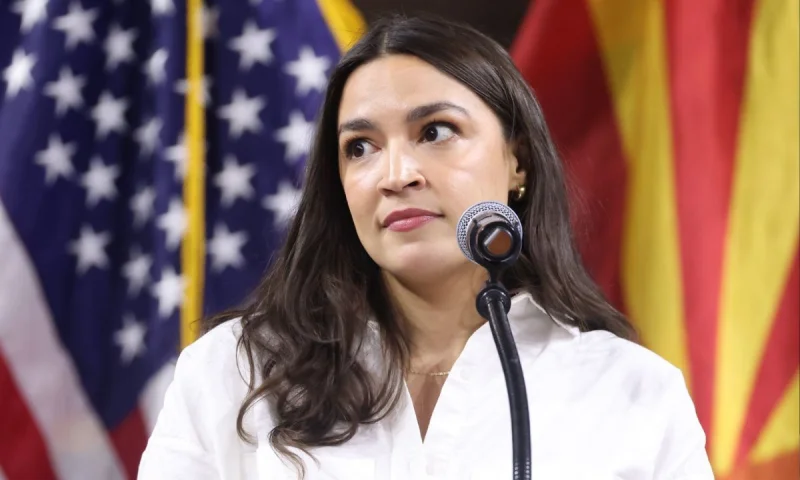
Alexandria Ocasio-Cortez has not decided whether to run for the White House in 2028, but her May travel through battleground states has made that uncertainty the story itself. The New York Democrat has appeared at a string of high-profile events, from voting rights remarks in Montgomery, Alabama, to a joint address with Senator Raphael Warnock at Ebenezer Baptist Church in Atlanta.
She also spoke in Philadelphia, attended the Power Rising Summit in Chicago, and met with Martin Luther King Jr.'s daughter at the King Center while visiting the Morehouse School of Medicine. Soon, she is set to campaign for congressional candidate Sam Forstag in Missoula, Montana, keeping up a pace that looks less like downtime and more like a political test run before the 2028 cycle starts to harden.
The most scrutinized stop came at Ebenezer Baptist Church, where Ocasio-Cortez told the crowd, "I'm here today, brothers and sisters, with a simple message: We stand together and we are not going back." She added that "What happens in Georgia happens to New York, what happens to Tennessee happens to California, what happens to Louisiana happens to all of us, Ebenezer, because this is America," and said, "We are not divided by state, we are united by our humanity and common citizenship."
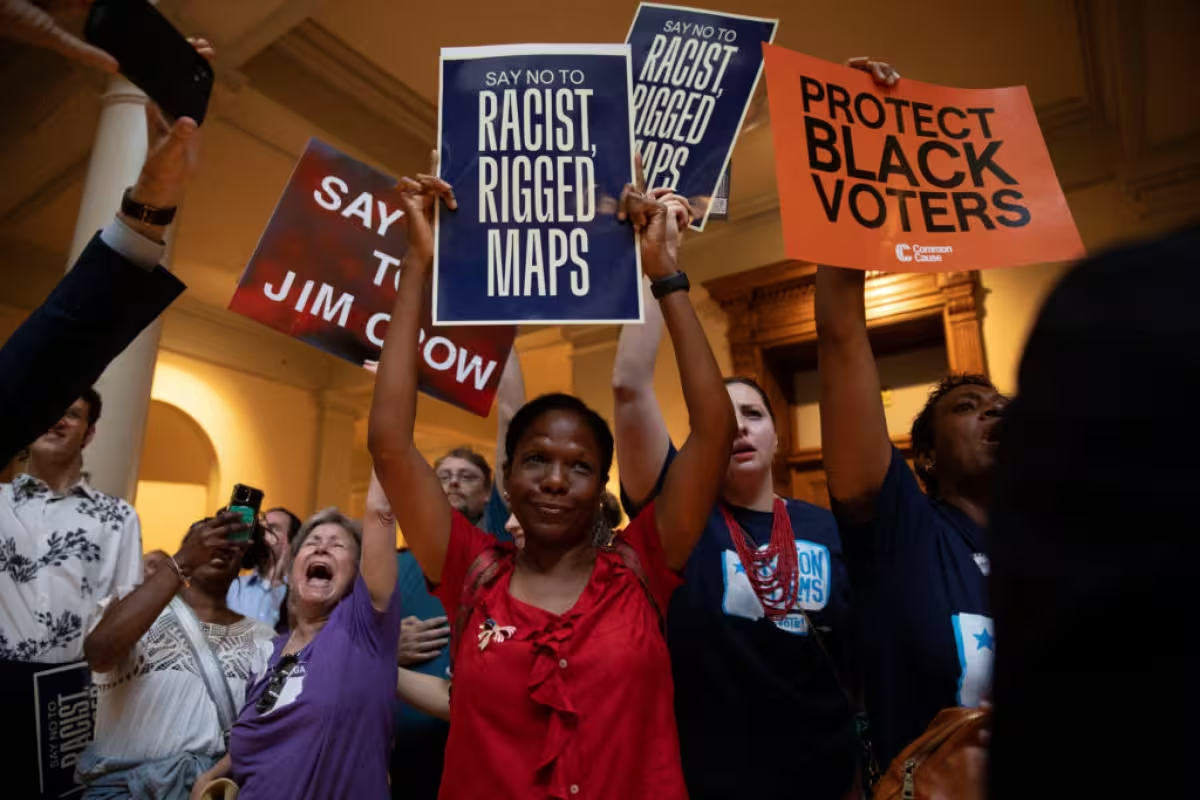
Her Philadelphia remarks were even sharper. Ocasio-Cortez said, "MAGA is the last dying breath of the confederacy" and followed with, "In response to a confederacy, we have this moment here of liberation, abolition, and revival of the values that make this country actually great." The language was aimed at an audience already inclined to agree, but it also underscored the scale of the national fight she is choosing to place herself in.
People close to her told Axios she is still genuinely undecided about whether to run for president, and representatives said the same, while adding that her ambition is to enact substantial change. One person close to Ocasio-Cortez said, "The way she will evaluate the decision is really around where she believes she can make the most change." That leaves open another possibility: a Senate bid in 2028, which people close to her say she is also weighing.
The timing matters. In March, Pete Buttigieg was denied a similar chance to speak at Ebenezer Baptist Church, a reminder that access to symbolic stages in Democratic politics is selective and watched closely. Ocasio-Cortez's May circuit through Alabama, Georgia, Pennsylvania and Chicago has given her repeated exposure in places that will matter in any national race, while Democratic operatives estimate a potential campaign could bring in £79,000,000, or $100,000,000, in small-dollar donations.
That money and that attention do not amount to a candidacy. But they do show why her itinerary is being read so carefully. Ocasio-Cortez is acting like a politician measuring the map, the money and the message at once, and until she decides whether that path leads to a presidential campaign or a Senate run, every stop will keep drawing the same conclusion: she is keeping her options open, and everyone else is already treating her like a contender.
