


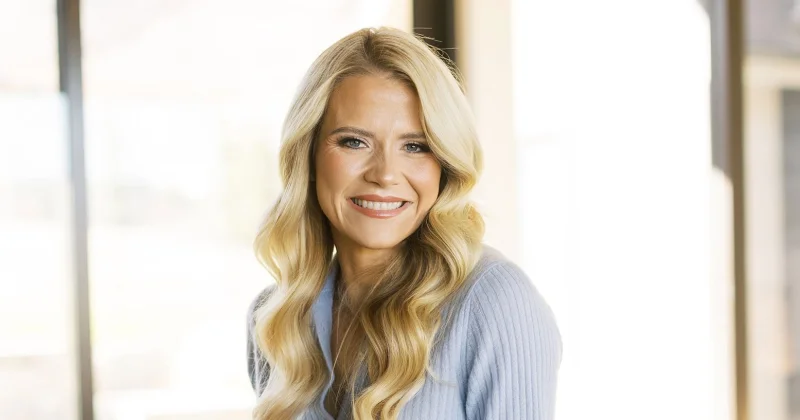
Elizabeth Smart says photos from a bodybuilding competition she posted in April drew more attention than her recent Netflix documentary, her media appearances and her December memoir, Detours, combined. The 38-year-old said the reaction stunned her when she shared images from the contest on April 21 and later discussed them in an interview.
Smart wore a blue bikini, sky-high heels and a deep tan in the competition photos, a look that made the response even more striking to her. “I could not believe the response,” she said, adding that she has long felt pressure to present herself in a certain way.
That attention landed on a woman whose life story has already been told in painful detail. Smart was kidnapped at knifepoint from her Salt Lake City bedroom at age 14 by Brian David Mitchell, who threatened to kill her family if she made a sound. He held her captive for nine months in makeshift campsites in the Utah mountains and San Diego, and Smart has said Mitchell raped her and that she endured repeated abuse from Mitchell and Wanda Barzee before being rescued in 2003.
For years after her rescue, Smart became one of the world’s most visible advocates for victims of sexual violence. She has also built a life as a wife, mother, bestselling author and speaker, raising children Chloe, James and Olivia with her husband, Matthew Gilmour. That is part of why the bodybuilding photos landed as more than a novelty: they showed her trying to define herself on her own terms, outside the identity that first made her famous.
Smart said this was her fourth time competing, and she described the choice to share the photos as an act of pushback against fear. About 90 percent of what she felt, she said, was fear of how people would respond. Even ordinary moments, she said, can draw scrutiny, including when she is at a pool in a bikini.
“I always felt like there was a way I needed to present myself,” she said, describing a pressure that followed her long after the kidnapping and rescue. She said bodybuilding has helped free her, and added, “I am not just a victim or a kidnapping survivor.” For Smart, the point was not to erase what happened to her, but to insist that it is not the whole story.
“I’m not just one thing. I am many things,” she said. “I don’t want to live a life where I was too afraid to actually live.” And in the end, that is the answer her photos offered: a survivor who is still choosing to be seen, and to make the most of the life she has rebuilt.
