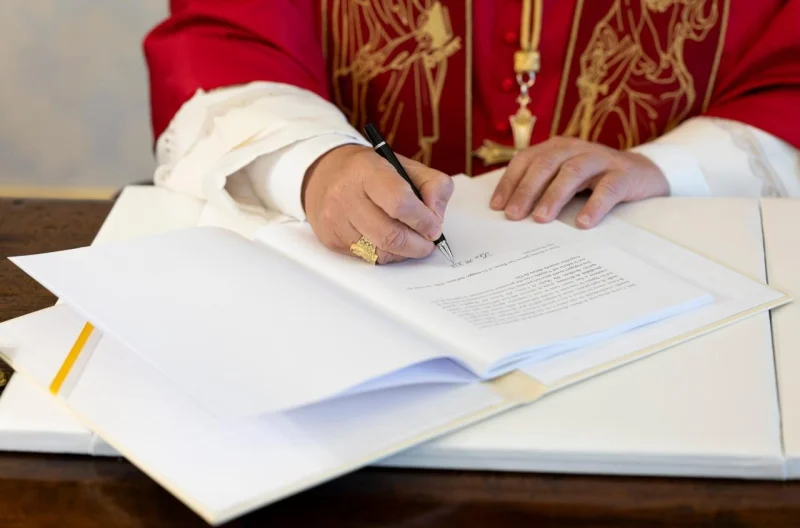
Pope Leo XIV on Monday, May 25, published his first encyclical, Magnifica humanitas: On Safeguarding the Human Person in the Time of Artificial Intelligence, a broad warning that artificial intelligence is not a force set against humanity, but one that still demands moral limits. Signed May 15, the text asks the world to build for the common good and to remain human.
The document is divided into five chapters and places AI at the center of one of the principal challenges of the contemporary age. In one of its sharpest claims, Leo says technology is not inherently evil, but it is never neutral because it absorbs the intentions of those who devise, finance, regulate and use it. For the pope, that means the same tools that can widen knowledge and service can also pull society toward exclusion, domination and loss of dignity.
The weight of the encyclical comes from both its timing and its lineage. Leo signed it on May 15, the 135th anniversary of the promulgation of Pope Leo XIII’s Rerum novarum in 1891, the founding text of modern Catholic social teaching. The new work is also presented in the tradition of the church’s later social teaching, including the language of Pius XII, who used the expression Social Doctrine of the Church in his Apostolic Exhortation Menti Nostrae in 1950. Leo’s own text says its dynamic character is meant to be read not as a fixed manual, but as a theology of communion in history.
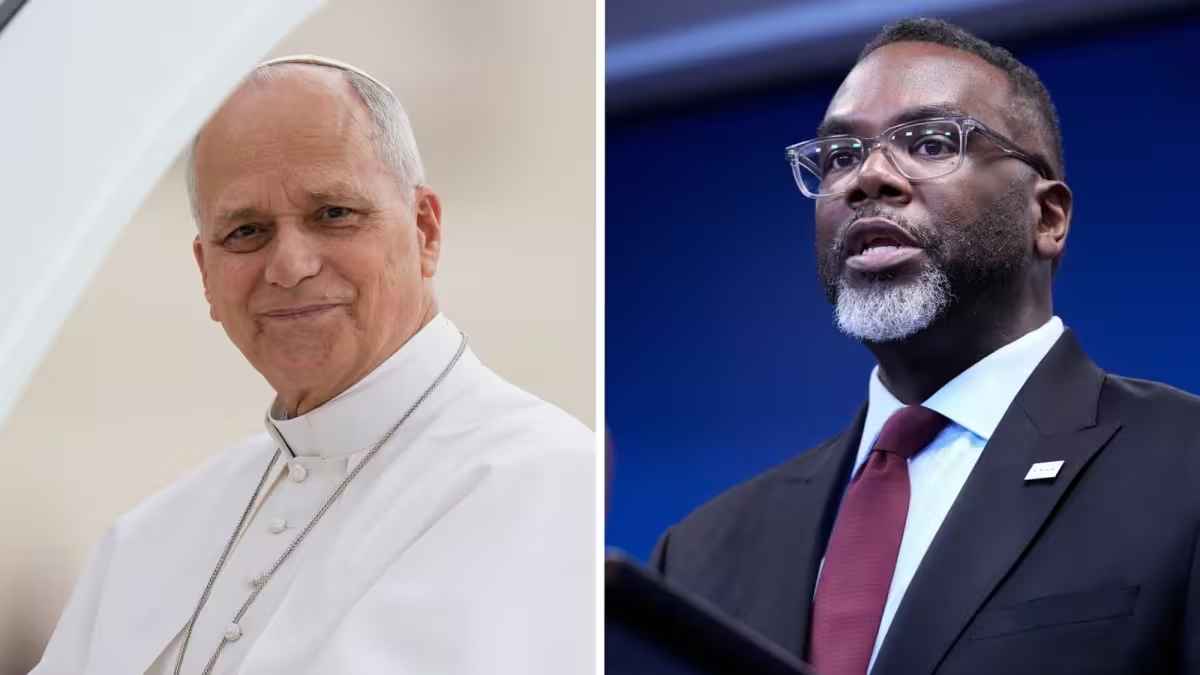
The first chapter, A Dynamic Approach Faithful to the Gospel, traces the social doctrine of the church through recent magisterium and the Second Vatican Council. The second, on the foundations and principles of that doctrine, puts the dignity of the person at the center, describing each human being as created in the image and likeness of God. It warns that the pressure of new ideologies or certain highly powerful interests can reduce the human person to a resource to be used and exploited, and insists that dignity is neither acquired nor earned, nor does it need to be justified.
Leo extends that logic to rights. He names the inviolability of human rights, beginning with the right to life from conception to its natural end, and says induced abortion, the killing of the innocent and euthanasia are choices that the church considers gravely wrong. He also identifies the recognition of the rights of minorities, with particular attention to women, as another foundation of the social doctrine.
That sequence matters because the encyclical does not treat AI as a separate technical question. It places the technology inside a wider argument about who gets to define progress and whose interests shape it. Leo’s warning is that systems built to serve people can end up measuring people only by what they achieve or produce, and that the moral test of the age is whether innovation still leaves room for human dignity to govern the result.
Magnifica humanitas is therefore less a rejection of artificial intelligence than a demand that it be governed by a human standard the pope says cannot be outsourced. The unanswered question is not whether the church will speak on AI again, but whether the people who build, fund and regulate it will accept that they are shaping more than a tool — they are shaping the conditions under which human life is judged.