


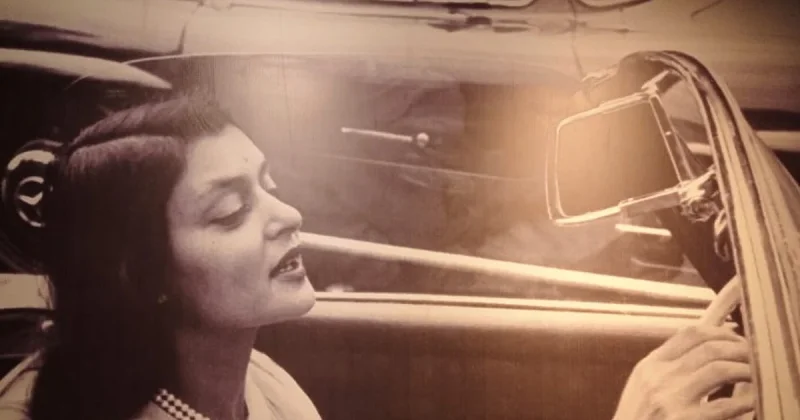
The British Museum is quietly showing some of Maharani Gayatri Devi of Jaipur’s most prized jewels, while a separate cache that appears to have been donated anonymously by the former princess around 2001 is set to remain unnamed until 2029. The collection includes her Cartier Emerald Suite, Cartier Ruby Suite and Bulgari Gold Suite, and most of the Maharani’s jewels are now arranged in Display Case 14 in Room 47, Europe 1800-1900.
Gayatri Devi was no ordinary collector. The Cooch Behar princess married the Maharaja of Jaipur, won the world’s largest landslide election victory and was later jailed by the Indian government after the Emergency. She also built up a spectacular jewellery collection, and 25 years ago gave that collection to the British Museum, where it has become one of the museum’s most striking displays of royal Indian craftsmanship and European reinvention.
What makes the display unusual is the way it splits the story of the jewels in two. The Indian pieces are in the adjacent Islamic Art Gallery, while the British Museum’s Europe 1800-1900 rooms hold the best-known sets. The cabochon emeralds inlaid with ruby and diamond flowers are Indian work of the 18th-19th century, but Cartier later reset them in the Western style with baton diamonds, creating a hybrid piece in the style of the 1930s. They were probably intended for an Indian necklace in origin before being re-used by Cartier.
That hybrid approach was no accident. Cartier travelled widely in India in search of commissions from clients who wanted their jewels reset in platinum in the Western taste, and the house also carried back quantities of Indian stones and pearls for Western buyers. Fashionable and artistic society in London and Paris embraced that exotic Indian style, and Cartier’s showpieces at the international exhibition in Paris in 1925 were set with magnificent carved Mughal emeralds.
Some of the pieces in the museum’s collection remain unmistakably personal. The Cartier Ruby and Diamond Necklace has a central element that detaches for wear as a clip brooch, and the necklace and earrings came in an original fitted green leather Cartier case. The earrings were made in a different style and were not designed to match. The Bulgari set, meanwhile, includes a necklace and earrings in one original pink leather box and a bracelet in another, both stamped BVLGARI ROMA, with the necklace case opening at the front into two wings and the bracelet case stamped in gold rather than black.
The details tell their own story. One necklace is made of diamonds set in gold with a pendant of diamonds and a teardrop emerald, with pearls along the edges and in five rows at the clasp, strung with rubies and emeralds and finished with enamel floral patterns on the reverse. Another necklace is formed of emerald beads with diamond and platinum settings. Together, the pieces show how the Maharani’s jewels moved from courtly India to a museum case, and how the museum has chosen to present them: part royal treasure, part design history.
For Gayatri Devi, who once described herself as “playing badminton with the prostitutes & murderesses,” the jewels now outlive the politics that shaped her life. The question left by the anonymous gift is not whether the pieces matter — the museum has already answered that by putting them on display — but how long it will be before the donor’s identity becomes public and the full story behind the gift is told.
