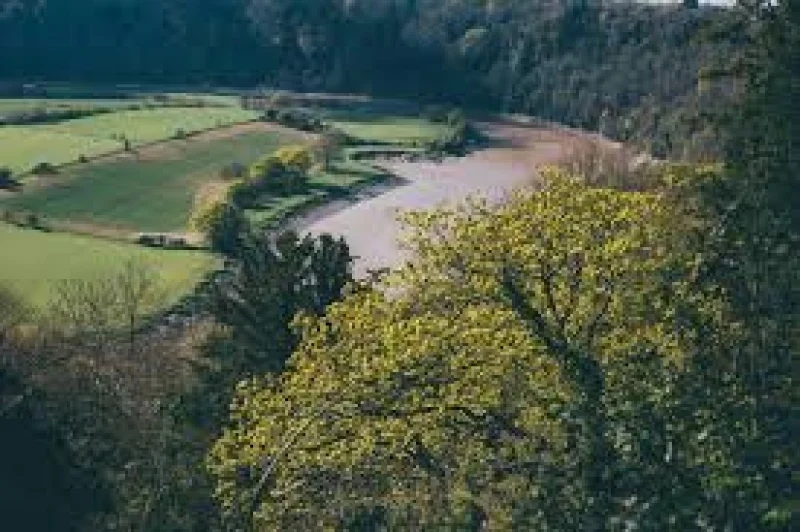
The River Wye’s entire 130-mile catchment has been formally recognised as a living ecosystem with intrinsic rights under a new charter celebrated on Sunday at the Hay-on-Wye literary festival. The move gives the river a legal and civic voice at a moment when campaigners say it is already under severe strain.
The charter sets out the right to flow, to biodiversity, to be free from pollution, to be supported by a healthy catchment, to regenerate and to be represented. Herefordshire and Powys county councils have already implemented it, while Gloucestershire and Monmouthshire are expected to adopt it soon. Jackie Charlton said the river was central to the environment, communities and heritage of the area and that adopting the charter was a clear statement that its health matters and must be protected.
The Wye runs from the Cambrian mountains in mid Wales to Chepstow and the Bristol Channel, and much of it is already protected as a special area of conservation. But over the past decade the river has suffered near ecological collapse, according to campaigners, who blame excess nutrients from the rapid expansion of industrial chicken farming in the catchment, made worse by sewage spills. That combination, they say, has fuelled algae, fungus and weed growth along a river that many people once saw as one of the region’s defining natural assets.
The charter arrives as the Wye sits at the centre of the biggest environmental pollution claim yet to reach the High Court. More than 4,500 people who live or work near the Wye and the nearby Lugg and Usk have joined a case against Avara Foods and Dŵr Cymru. Both companies deny the claims against them. The legal fight has helped turn the river into a national test of whether the damage to a whole catchment can be matched by accountability on a scale large enough to address it.
The Wye charter is part of a wider rights of nature movement that has already seen rivers in Ecuador, Canada and New Zealand granted legal personhood in recent years. In 2025, ecologist Dr Louise Bodnar became the first-appointed voice of the River Wye, a role that gives the river a named representative as debate around its future intensifies. The charter also lands as the House of Lords considers a proposal by Natalie Bennett to change nature’s legal status from objects, property and resources to subjects with inherent rights.
Angela Jones said the reality was that the river now stood on the cliff edge of ecological collapse. She said the charter was an important and historic statement of intent, but warned that what was needed now was urgent action, including stronger regulation of intensive poultry operations, meaningful limits on nutrient pollution, proper enforcement against offenders and a fully funded restoration strategy for the entire catchment. Without immediate intervention, she said, future generations could inherit a biologically dead river instead of the living Wye that so many had fought to protect.
The charter does not solve the Wye’s pollution crisis on its own. What it does is make the river’s protection a formal commitment across local government and place its recovery at the centre of the next phase of the fight over what is being done to it, and what still might be saved.