


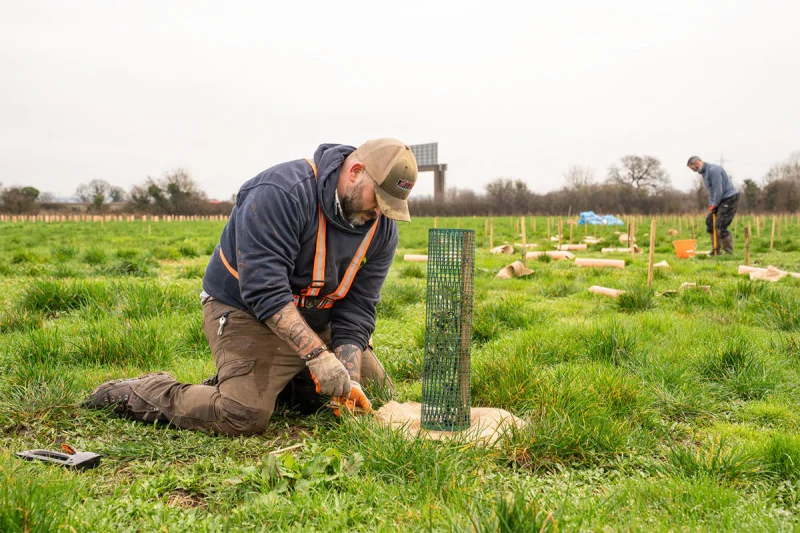
Chester Zoo has created more than five hectares of new woodland in Cheshire after planting 5,200 native trees on its estate during winter, adding an area roughly the size of 40 Olympic swimming pools. The work was announced on May 22, the International Day for Biological Diversity, and builds on nine hectares of woodland planting completed on the site in 2024.
The latest planting took place on a section of land beside the M53, where around 200 British tree species and woody shrubs were put in the ground. The project also tested a new approach on a third of the saplings, with experimental pellets buried alongside the young trees to see whether special soil fungi can help them establish faster and grow more strongly on degraded soils. Those pellets are designed to supply fungi that naturally bond with tree roots and can give extra protection against soil-borne disease.
The woodland creation is part of a wider regional drive to boost biodiversity and help tackle climate change. It is being funded through the UK Government’s Trees for Climate Fund and managed by The Mersey Forest, with additional support from the Environment Agency. Volunteers from the agency joined corporate volunteering days to help plant the trees, while the work also supports the Local Nature Recovery Strategy for Cheshire, The Mersey Forest Plan and the Chester Zoo-led Networks for Nature project.
Chester Zoo said the planting marked another step toward its aim of managing 30% of its 265-hectare estate for biodiversity by 2030. Ruby Merriman said the goal reflected a broader push to create larger woodland blocks across the site, giving wildlife more places to nest, roost and feed, while woodland glades would add habitat for butterflies, birds, bats and other species. The zoo’s land already supports woodland wildlife including tawny owls and brown long-eared bats.
The work also drew praise from The Mersey Forest, with Lauren Taylor saying the collaboration would help transform this part of the zoo’s estate as the new woodland becomes established. Katherine Causer said the project was creating a living legacy that would strengthen local biodiversity, store carbon and help protect communities for generations. With the winter planting now in the ground, the question is no longer whether the site can grow more woodland, but how quickly the new trees and soil fungi trial can turn a planted field into a functioning habitat.
