


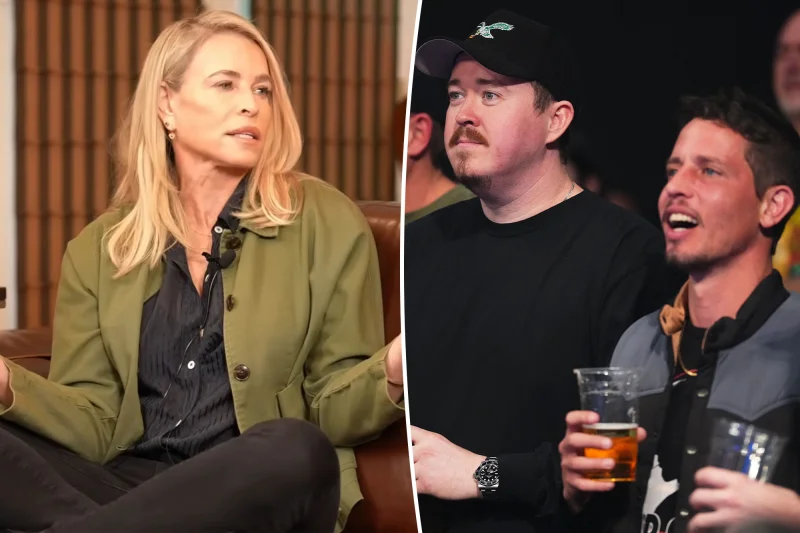
Chelsea Handler took aim at Shane Gillis and Tony Hinchcliffe on Wednesday, saying the jokes they told at Kevin Hart’s Netflix roast crossed a line and adding that one Gillis bit about lynching was “worse than rape.” Speaking on Deon Cole’s Funny Knowing You podcast, Handler said she had been getting messages on social media about the two comedians from their alleged former partners.
“It’s just everything we know, that they’re racist, that they’re bigots, they’re sexist,” Handler said, while also saying she did not enjoy any of the jokes told during the roast honoring Hart. “It was ick. It was gross,” she said.
Handler’s comments landed in a week already thick with fallout over the roast, where the jokes at issue included a lynching joke about Hart and a reference to the death by suicide of The Tal. The Hollywood Reporter said the material by Gillis and Hinchcliffe drew outrage, and by Thursday a New York Post opinion piece had also taken Handler to task for her criticism.
Handler said she had been friends with Hart for years, which helped explain why she was speaking so sharply about material directed at his event. But the reaction did not stop there. Comedian Steve Byrne entered the debate with a lengthy post on X, saying Handler had yelled out, “You’re doing a great little Asian job,” and adding, “I personally know Shane & Tony aren’t racist.” He also wrote, “I don’t think Chelsea is racist.”
Gillis answered Handler the same day with a statement to The Hollywood Reporter that mixed sarcasm with self-promotion. “This is a big moment for Chelsea. I am glad she’s capitalizing. Good for her. We’re all rooting for her. Anyway, come see me July 17 at the football stadium in Philly,” he said.
The exchange underscores how quickly roast comedy can turn into a wider culture fight. Handler has built much of her career on insult humor, and she has not hidden her belief that the roast jokes went too far. Gillis, meanwhile, treated the criticism as another stage to promote his next show, while Byrne’s defense of the comics pushed the argument into an even messier place. For readers keeping score, the issue is not whether the jokes were loud enough to offend — they clearly were — but whether the backlash changes how the comics’ audiences, and their peers, judge the line between roast banter and something uglier.
