


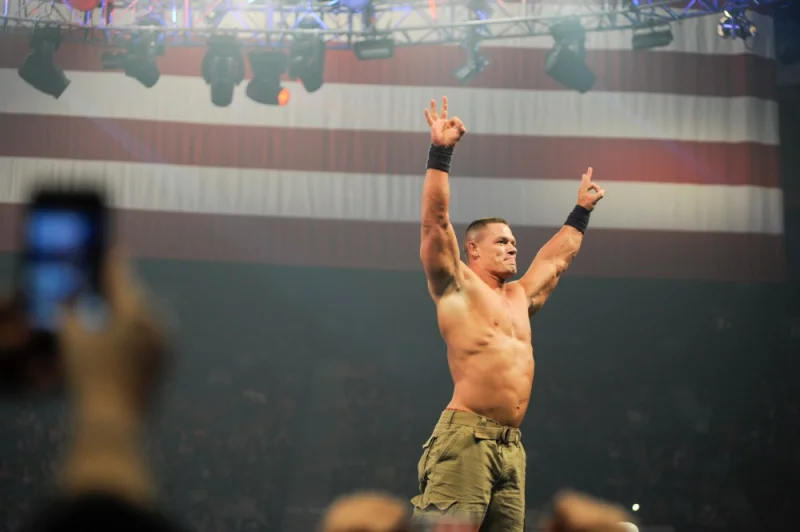
USA Network will air “WWE: Made in America” on May 29, immediately after a new episode of “SmackDown,” giving the wrestling company a primetime showcase for a special built around its place in American culture. Encore presentations are set to follow throughout June and again on July 4.
The special is designed to trace WWE’s rise from a regional business into a global powerhouse, using five decades of history to show how the company mirrored the American spirit. It will look at the patriotic heroes of the 1980s and the newest generation of superstars, with Joe Tessitore hosting and Lilian Garcia performing “America the Beautiful” from Nashville, Tennessee.
The lineup reaches across eras and storylines. Interviews in the special include Paul “Triple H” Levesque, Cody Rhodes, Jimmy Hart, The Undertaker, Booker T, Sgt. Slaughter, Kane, Matt Cardona, Carmelo Hayes, Nattie, Je’Von Evans, Garcia and Erielle Reshef, along with rarely seen interviews pulled from the WWE archives. Matt Braine directed the project, while Levesque, Lee Fitting and Ben Houser executive produced it for WWE; Brian Decker and Marc Pomarico are co-executive producers.
Positioned as part of America 250, the special leans on WWE history to connect the company to a broader American identity. That framing gives the program a purpose beyond nostalgia: it is meant to make the case that WWE’s biggest characters and moments have long been tied to the country’s own self-image, from its patriotic icons of the 1980s to the stars carrying the brand now.
The timing also matters. Airing directly after “SmackDown” on May 29 puts the special in front of one of WWE’s most reliable weekly audiences, while the June repeats and July 4 encore keep it in circulation through the summer holiday stretch. Levesque summed up the company’s self-image in a line used to promote the project, saying WWE and USA “go hand in hand” because, in many ways, WWE is “America’s greatest export.”
That is the claim the special is built to support, and the July 4 repeat is the sharpest sign that WWE and USA Network want the message to land as something larger than a one-night documentary. The question now is not whether the company has the archive or the star power to tell that story. It is whether viewers will see “WWE: Made in America” as a celebration of wrestling history, or as a broader argument about where WWE fits in the American story today.
