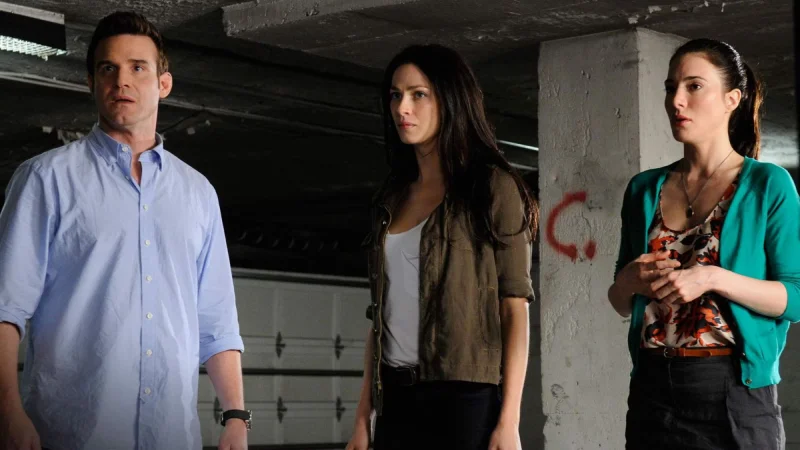
Syfy ended Warehouse 13 on May 19, 2014, with a six-episode final season that had to do the work of a much larger finish. The science fiction procedural, which premiered on the network in 2009, went out with the finale “Endless” after a run that had made it one of Syfy’s most successful series.
The shortened ending forced the show to move fast. Pete Lattimer and Myka Bering, the Secret Service agents sent to a covert South Dakota facility to catalog and contain supernatural artifacts, were thrown back into the fight almost immediately after the Season 4 cliffhanger. That cliffhanger had left Paracelsus in control of the Warehouse and history altered, but the final season quickly resolved that threat and shifted toward wrapping up the rest of the story.
The number of episodes told the real story. Syfy announced in May 2013 that Warehouse 13 would conclude with six episodes, down from the usual 13 and far below Season 4, which had been expanded to 20 episodes. The network said the cancellation was tied to the financial limits of science fiction television, even as it was restructuring its schedule and leaning toward cheaper unscripted programming and different genre formats.
That shift left the series with less room than it needed to breathe. The show had built a loyal following by mixing historical mythology with workplace comedy, and for several years it had looked like one of the network’s steadiest scripted bets. But the economics that supported a bigger run were changing, and live ratings had dropped during Season 4, narrowing the case for keeping the show alive in its old form.
The final stretch showed the cost of that compression. The romance between Pete and Myka was pushed to the forefront so it could be resolved by the finale, while Claudia Donovan’s destiny as the next Caretaker of the Warehouse did not get much room for the internal conflict it deserved. Steve Jinks and Helena G. Wells, meanwhile, were given send-offs that felt more functional than emotional, the kind of endings that happen when a series has to close every open door at once.
Artie Nielsen still guided the team through the last chapter, but the show’s closing movement was less about new mythology than about getting the characters to their destinations. The result was a finale that answered the big questions fast, then hurried toward closure before the season could linger on what the loss of the Warehouse meant for the people who had built their lives around it.
That is why Warehouse 13 still reads, 12 years later, as a case study in how cable television changed under pressure. The series was popular enough to matter, but not insulated from the cost cuts that reshaped Syfy. Its ending was not a mystery. It was the network choosing a cheaper future, and the show making the most of the time it had left.