


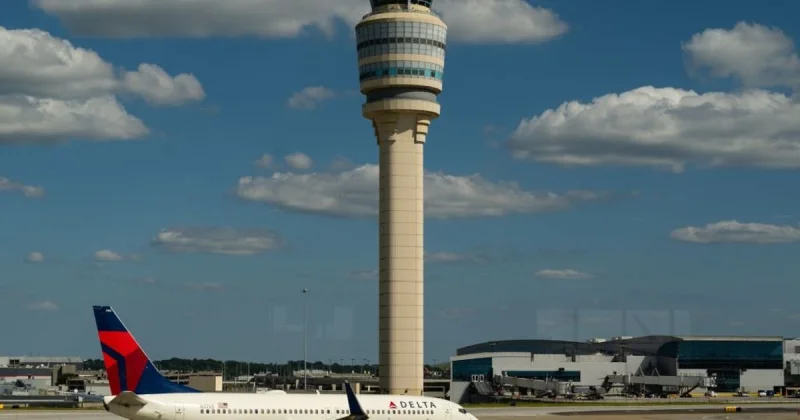
US authorities on Friday temporarily barred green-card holders from entering the country if they had traveled to the Democratic Republic of the Congo, Uganda or South Sudan in the last 21 days, widening an effort to keep Ebola from crossing into the United States. On Saturday, the Centers for Disease Control and Prevention said it was expanding enhanced Ebola screening to the Hartsfield-Jackson Atlanta airport, adding a second U.S. entry point for Americans returning from those countries alongside Washington’s Dulles airport and making George Bush Intercontinental Airport part of the broader travel conversation as the response widened.
The order applies for an initial 30 days. It goes further than a previously announced restriction that blocked only people without U.S. passports who had visited the three countries, while exempting U.S. citizens and lawful permanent residents. This time, lawful permanent residents are included if they were in the affected countries in the past 21 days, a sign that officials are broadening the response as they try to stop an outbreak that health agencies say has already moved into a more serious phase.
The scale of the danger is what drove the move. The World Health Organization has raised the risk of the rare Bundibugyo strain of Ebola turning into a national outbreak in the Democratic Republic of the Congo to very high, and it has declared the outbreak in the Democratic Republic of the Congo and Uganda an emergency of international concern. The agency says 82 cases have been confirmed so far in the Congo, with seven confirmed deaths, 177 suspected deaths and almost 750 suspected cases linked to the strain.
Marco Rubio said the goal was straightforward: the United States cannot let Ebola cases come here. Health and Human Services and the CDC said in a statement that allowing the CDC director or another secretarial delegate to prohibit entry of certain lawful permanent residents is reasonably required in the interest of public health. The CDC added that using that authority for a limited period provides a balance between protecting public health and managing emergency response resources.
There is also a wider regional concern. The Africa Centres for Disease Control and Prevention said 10 African countries are at risk from the virus, and its director, Jean Kaseya, listed Angola, Burundi, the Central African Republic, the Republic of the Congo, Ethiopia, Kenya, Rwanda, South Sudan, Tanzania and Zambia among them. The warning underlines that the outbreak is no longer being treated as a local problem in one country, but as a threat that could move across borders if containment slips.
For travelers, the new rule adds friction where there had already been screening. U.S. citizens returning from the Democratic Republic of the Congo, Uganda or South Sudan were already being screened at Washington’s Dulles airport before the Atlanta expansion. The new step for green-card holders closes a gap left by the earlier order, which had allowed lawful permanent residents to keep entering even after recent travel to the affected countries. Health officials are betting that narrower, more aggressive screening now is cheaper than trying to chase the virus after it reaches U.S. soil.
The answer, for now, is that the government is moving faster and wider than it did days ago because the outbreak has not stayed where it began. The next test is whether the added screening and entry ban can keep that from becoming an American case number.
