


Roland-Garros says Thursday’s draw ceremony at L’orangerie carries real intrigue, and the women’s singles field may be the reason. With the ceremony set for 2 p.m. ET, the tournament has called this one of the most wide-open women’s draws in recent years, and it says 10 unseeded players could cause serious damage in the opening week.
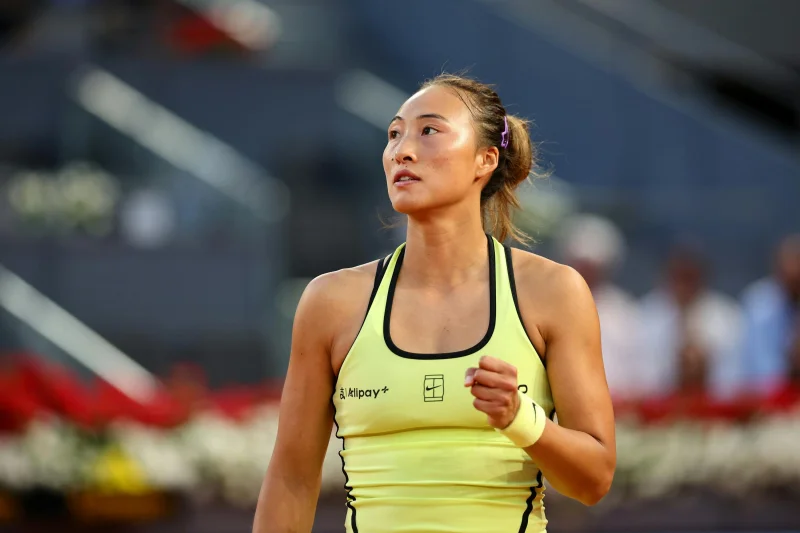
Qinwen Zheng is among the names that give the draw its edge. The No. 53 player is rebuilding her ranking after elbow surgery in 2025, but she still owns a 10-4 lifetime record at Roland-Garros, reached the quarterfinals here last year and stunned then-world No. 1 Iga Swiatek in the semifinal at the 2024 Paris Olympics. That mix of current uncertainty and proven clay-court pedigree is exactly why the draw matters now: one difficult first-week matchup could reshape the path for higher-ranked players before the second week even begins.
Another player likely to worry anyone around her section is Nikola Bartunkova, who reached her first tour semifinal last season and has already shown she can handle bigger stages. She made the third round at the Australian Open by beating Belinda Bencic and later reached the round of 16 in Rome after upsetting Madison Keys. Those results do not make her a household name, but they do make her the kind of opponent seeded players would rather avoid in Paris.
Alex Eala brings a different kind of momentum. She became the first Filipina to crack the WTA top 50, reached the Miami semifinals in 2025 and has logged six top-20 wins and four top-10 wins since last March. That record makes her more than a promising story line. It makes her a live danger in a draw that Roland-Garros itself has described as unusually volatile.
The tournament’s own history explains why that warning lands. Barbora Krejcikova won Roland-Garros as an unseeded player in 2021, beating Anastasia Pavlyuchenkova in the final and becoming only the third unseeded women’s singles champion in tournament history. Krejcikova was back in form last week with a 125k final in Parma, a reminder that the gap between seeding and threat level is not always the same thing in Paris.
That same logic applies to Tereza Valentova, who won the junior title in Paris in 2024 and now enters the main draw at a peak ranking of No. 43. She qualified for the main draw last year, won her first match and then fell to Coco Gauff in the second round. Zeynep Sonmez is another player whose ranking and results make her hard to dismiss. The highest-ranked Turkish player in history made her Grand Slam debut at Roland-Garros in 2024, has yet to win a match on the Parisian terre battue, but has also reached the third round at Wimbledon and the Australian Open.
There are established clay names in the mix too. Maria Sakkari was one point from reaching the final in Paris in 2021 before losing to eventual champion Krejcikova in the semifinal, but she has lost four of five matches on the Parisian clay since then. Lois Boisson, meanwhile, turned heads with back-to-back wins over Jessica Pegula and Mirra Andreeva in 2025, becoming the lowest-ranked women’s singles Grand Slam semifinalist in 40 years and only the second woman in history to beat multiple top-10 players in her Grand Slam debut. She was ranked No. 361 this time last year and now sits inside the top 50.
Yulia Putintseva, a two-time Roland-Garros quarterfinalist, adds another layer of danger to a field already packed with it. That is the tension heading into Thursday’s draw: the seeds will look for order, but Paris has already advertised chaos. If the unseeded names land in the wrong quarter, the first week may decide far more than it usually does.
