



The war in Iran is about to enter its fourth month, and reports suggest President Donald Trump and his secretary of war are preparing to rain more bombs on the country. The latest Iran war update points to a conflict that has not broken open the way its backers promised, but has instead hardened into a deadlock with no easy exit.
Trump, who once asked “who will stop Donald Trump?”, now appears to have boxed himself into a corner. The choice before him is blunt: resume what the article calls the illegal bombing of Iran on an even bigger scale, or accept a negotiated compromise that would look a lot like surrendering the path he has staked out.
That matters because the damage is no longer confined to the battlefield. The article says about 70% of Iran’s missile stockpile reportedly remains intact, leaving the war far from settled even as Gulf states oppose Trump’s threats to break the ceasefire and most US voters do too. At the same time, the economic shock is spilling outward. Since the conflict began, staples such as rice and wheat have doubled in price in Somalia, a reminder that this war is already being paid for far beyond Iran’s borders.
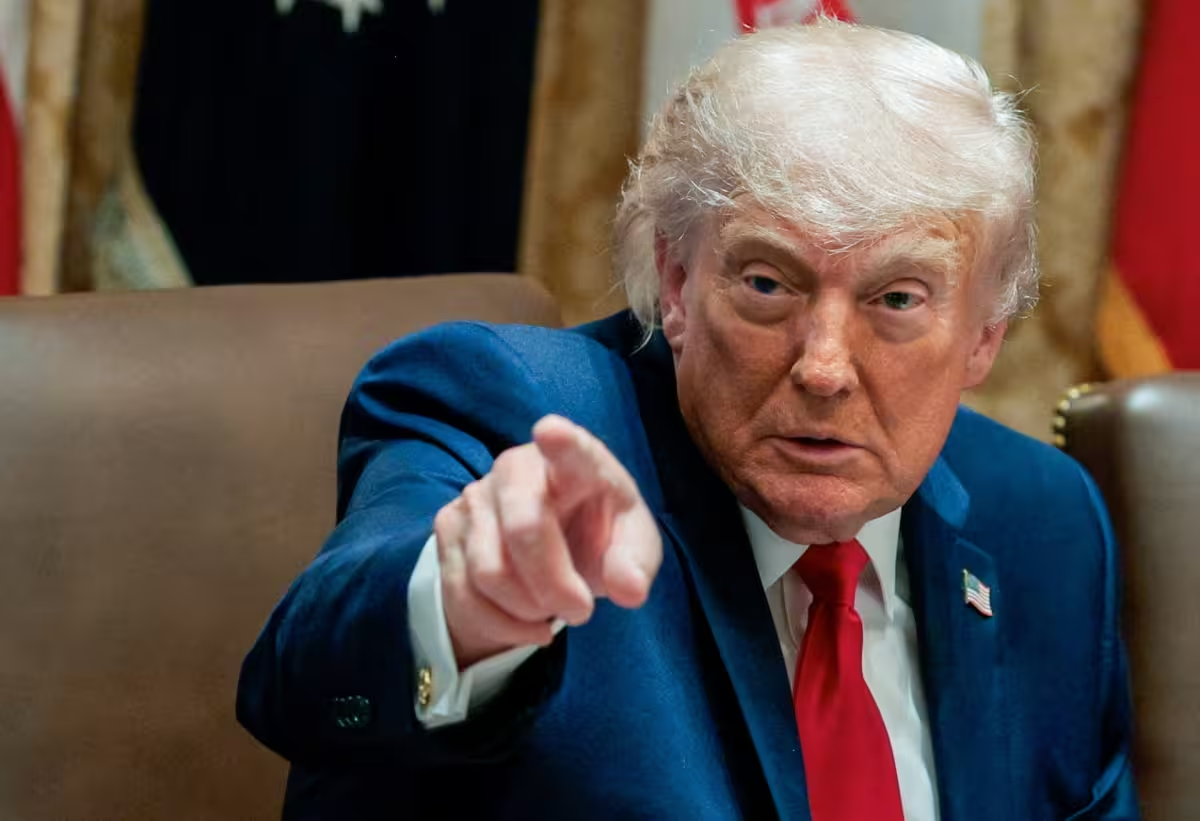
The wider context makes the pressure on Trump harder to miss. A peace deal broadly in line with Barack Obama’s 2015 nuclear pact with Tehran would amount to a major failure for him, especially after he helped wreck that agreement in the first place. The article says his approval ratings have fallen to about 37%, a weak political position for any president, let alone one weighing whether to escalate a war that he cannot easily claim to have won.
There is also a humanitarian bill that keeps climbing. The World Food Programme predicts that if the war continues, an additional 45 million people will face acute hunger. When the conflict began, warnings of another forever war were dismissed by some as exaggerated. Four months later, they sound less like alarmism than a forecast that has already started to come true.
The hard truth is that Trump started something he cannot finish on the terms he wanted. If he chooses more bombing, he risks deepening a war that has already drained credibility, raised prices and widened fear across the region and beyond. If he chooses compromise, he may finally slow the damage, but only by admitting that the exit looks a lot like the deal he spent years trying to destroy.
