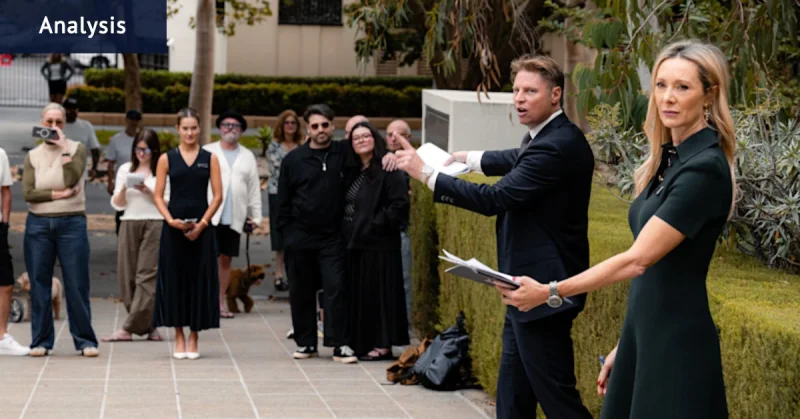
The first weekend after the federal budget delivered a blunt verdict on the auction market: buyers held the edge. Sydney’s preliminary auction clearance rate fell to 51 per cent on Domain data, while Melbourne’s rose to 60 per cent, a level considered a balanced market.
For Sydney, the result was four percentage points below the previous week’s preliminary reading and on some measures the weakest since auctions were interrupted by social-distancing measures in 2020. Melbourne’s early result was stronger, but agents said it was still likely to be revised down into negative territory once late results were counted.
The split matters because the budget changed the rules for investors at the very moment the market was already under strain. It limited negative gearing tax concessions to newly built properties while grandfathering existing arrangements, and it also scrapped the capital gains tax discount in favour of taxing above-inflation gains. Investors in new builds may still choose the old capital gains tax discount, but some decided not to bid at all after the budget was delivered.
Sydney tends to have more investor activity than Melbourne, which helped explain why its numbers weakened more sharply after the policy shift. Melbourne, by contrast, had already been leaning toward first home buyers for some time, helped by its lower prices and by policy settings that have made entry easier for some purchasers. That included a land tax increase for second home owners introduced in Victoria in 2024, while first home buyers have also been able to use federal low-deposit schemes.
Mathew Tiller said Melbourne had been drawing more first home buyers than Sydney over the past year because of affordability. “We’ve had probably a little bit more first home buyer activity in Melbourne over the past 12 months compared to Sydney just due to the affordability down there,” he said. He added that slower price growth had made Melbourne cheaper than Sydney and that the buyer cohort was not affected by the budget changes, having already been active in government incentives over the past 12 months.
That shift has arrived in a market that was already running at levels last seen in 2022, when prices were in their steepest downturn on record and the Reserve Bank was lifting the cash rate from almost zero. This year’s unexpected three rate hikes have already been making buyers cautious, and many are also reluctant to pay too much because of cost-of-living pressure and uncertainty about the economic fallout from the war in the Middle East.
Vendors who adjusted their expectations quickly have had the best chance of selling. Domain chief of research and economics Dr Nicola Powell said the clearance rate recorded “quite a dip” in April, a sign that the budget’s investor changes are landing in a market already sensitive to borrowing costs and buyer caution.
What happens next is likely to be a sharper divide between markets where investors dominate and markets where first home buyers are carrying more of the load. If rates stay tight and the policy settings keep squeezing investor appetite, Sydney’s auctions could keep losing momentum while Melbourne remains steadier, even if its early reading is eventually marked down.