


Electricity will meet two-thirds of new energy demand through 2050, while natural gas will cover another 25%, BloombergNEF said on May 19 in its New Energy Outlook 2026. The forecast lands after what the research firm described as three substantial energy shocks this decade: Covid-19, the war in Ukraine and the Iran war in the Middle East.
The new outlook is BloombergNEF's updated Economic Transition Scenario, a model of how the energy system is most likely to evolve over the next decade and through 2050. It points to a world in which fuel keeps losing ground. BNEF said fuel cannot compete on cost over the long term and is slipping to half of current levels of power generation use by 2050.
The pressure is already visible in the bill. In 2025, Asian economies with high import liabilities such as Vietnam, Japan, Indonesia and India paid between 3% and 6% of GDP on energy imports. The European Union spent 2.3% of GDP, while China spent 2.7%. Those figures help explain why the report sees the transition moving at different speeds across regions, with import exposure shaping policy as much as climate goals.
The biggest immediate pull on the grid is not a home or a factory but a server rack. Global data center capacity reached 84GW in 2025, and those facilities consumed 500TWh of electricity, equal to 1.9% of global demand. That use rose 20% year-on-year. By 2050, BNEF expects data center demand to more than double to 1,114TWh, or 3.6% of total electricity demand, with data centers accounting for a tenth of electricity consumed worldwide.
China remains the clearest example of how fast the shift has already gone. Electricity was already the dominant final energy carrier there by 2023, and BNEF sees coal's share of power generation falling from about 54% in 2025 to 19% in 2035 and 7% by 2050. In India, electricity is projected to overtake oil and coal by 2041. Europe is expected to reach that point by 2043, and the United States by 2047.
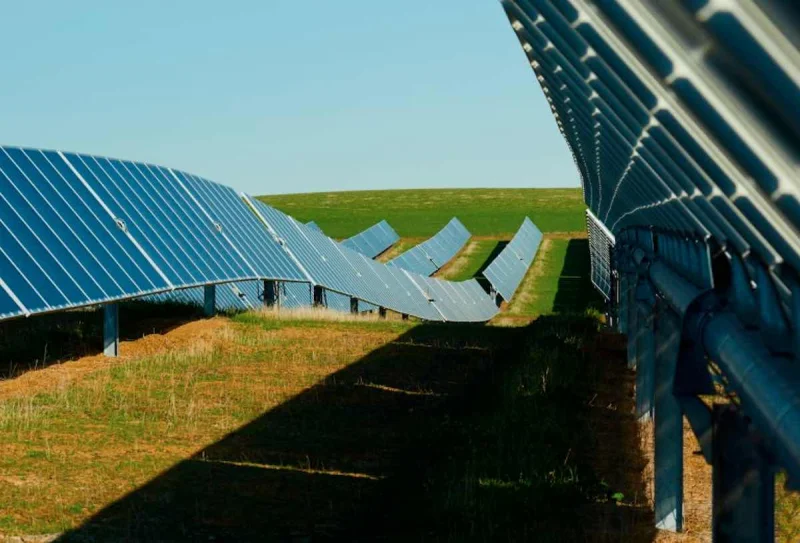
Solar is projected to become the world's largest generator of electricity by 2032, another sign that the center of gravity in energy is moving toward power rather than fuels. Battery storage is also expected to expand sharply, with capacity set to jump 17-fold from 223GW in 2025 to 3...
The gap between regions is the story inside the story. China has already crossed the point where electricity is the main final energy carrier, while India, Europe and the United States are still years away. That uneven pace is what makes the outlook so useful for investors and policymakers: the transition is no longer a single global race, but a staggered shift shaped by prices, imports and the sheer force of rising power demand.
