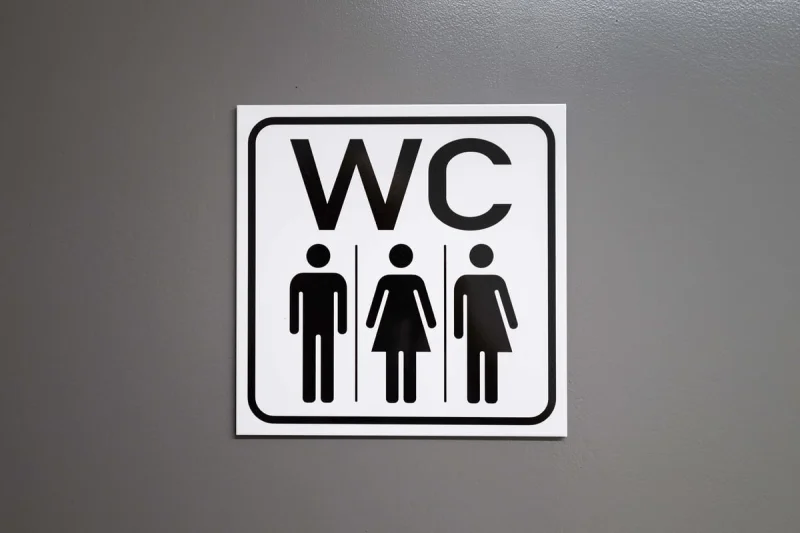
New guidance on single-sex spaces was laid before Parliament on Thursday, more than a year after a landmark Supreme Court ruling that said the words “woman” and “sex” in the Equality Act 2010 refer to a biological woman and biological sex.
The updated code of practice, which runs to more than 300 pages, is meant to help organisations make practical decisions about toilet provision and other single-sex services. It covers nine protected characteristics, including age, sex, disability, race and gender reassignment, and is intended to guide service providers such as hospitals, cafes and leisure centres.
Bridget Phillipson said the ruling had “made it clear that sex means biological sex” under the Equality Act, while also saying “trans people are still protected by the Act”. She said women have access to a single-sex provision and that trans people should be treated with dignity and respect.
The Government said the new code gives organisations clear, workable guidance and will help them take a pragmatic approach to protecting and serving the needs of society. The code of practice for services, public functions and associations has been updated in full for the first time since 2011, after the Equality and Human Rights Commission handed ministers a draft in September 2024.
The delay drew criticism from opponents of the Government, and Phillipson had said ministers were taking the time to get it right. On Thursday, the Prime Minister’s spokeswoman rejected a suggestion that publication on the last day before Parliament breaks for recess was an attempt to bury bad news. “No, as I said, we’ve been focused on getting it right and ensuring duty bearers are able to uphold the law,” she said.
The guidance matters because it is the practical rulebook for businesses and public bodies trying to apply equality law in everyday settings, from toilets to shared facilities. What happens next is whether organisations move quickly to rewrite policies around single-sex services now that the long-delayed code is finally in place.