


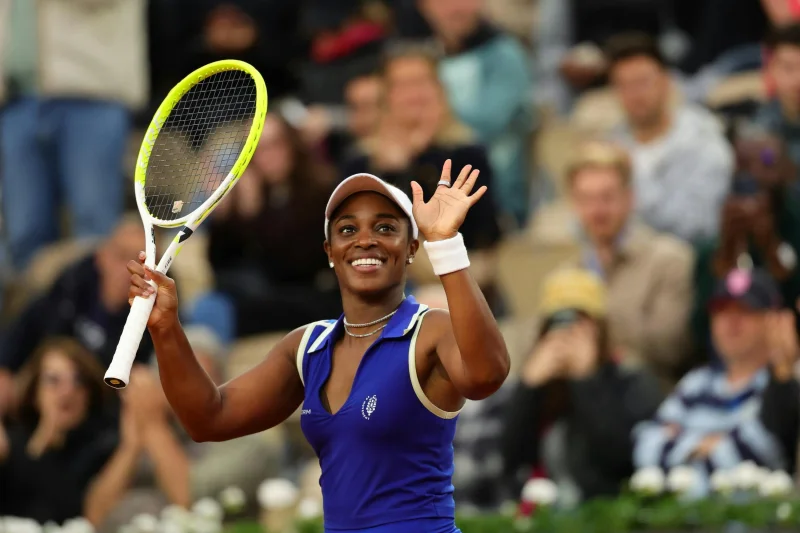
Sloane Stephens was back in Roland-Garros qualifying on Monday for the first time since 2011, and the former world No. 3 made the return count with a 6-3, 6-2 win over American Carol Lee on Court Suzanne-Lenglen.
Stephens, 33 years old in 2026, last had to play qualifying at the French Open when she was 18 years old. She opened this campaign with a straight-set win over Lee, who is 24 years old and ranked world No. 362, as she tries to work her way back after a right foot stress fracture.
The result carried a different kind of weight for Stephens, who said she is using 2026 to regain her match toughness and is playing on a protected ranking. “It just feels different this time, but it's fun. Playing on a protected ranking, playing qualies of Slams – just a different challenge,” she said. “Only time will tell, but I think I've had an interesting journey on the way back here.”
For Stephens, the immediate goal is not about reliving the past. It is about finding out how much of her game still survives the kind of stop-start road that has defined the last few seasons. “In general I’m here to prove to myself that my game is still there, that I can still play, that I'm still competitive. I think that's the most important thing,” she said.
That message lands differently because Stephens has already lived through a major comeback before. She won the 2017 US Open after returning from a left foot injury in 2016 that required surgery and a long rehab, then reached the 2018 Roland-Garros final before losing to Simona Halep after being a set and a break up. She elected not to have surgery on the current right foot injury, choosing instead to chase the season through with rehabilitation and match play.
Roland-Garros has often been a comfortable stage for Stephens. She owns a 35-13 lifetime record in the main draw and has reached the second week in nine of her 13 main draw appearances. She said the familiarity still matters. “I've played a lot of matches on that court,” Stephens said. “I'm super comfortable out there and just here at Roland-Garros in general.”
That comfort, though, now comes with a harder edge. Stephens said the challenge is different at 33 than it was when she first broke through, and she does not expect the path to be smooth. “I think there's a lot of things that I haven't done and things I need to accomplish and overcome, and I'm just ready for that. I mean, I've done all the good stuff, so I might as well,” she said. “It would be so easy to just walk away and quit now, but I think it's just tennis,” she added, noting that “it just kills you, it's frustrating, and it's difficult and there's a lot of adversity.”
Stephens summed up the job in front of her plainly: she is trying to show that the game is still there, the body can still hold up, and the results still matter. “The first time it clicked and I won a Slam and it was great, but it's not going to be like that again, right? It's going to be an uphill battle. I'm 33. There's a lot more happening. I’m just trying to prove myself that I still got it,” she said. For now, the first step is done, and Roland-Garros is once again asking the same question of Stephens that she has spent her career answering one match at a time.
