


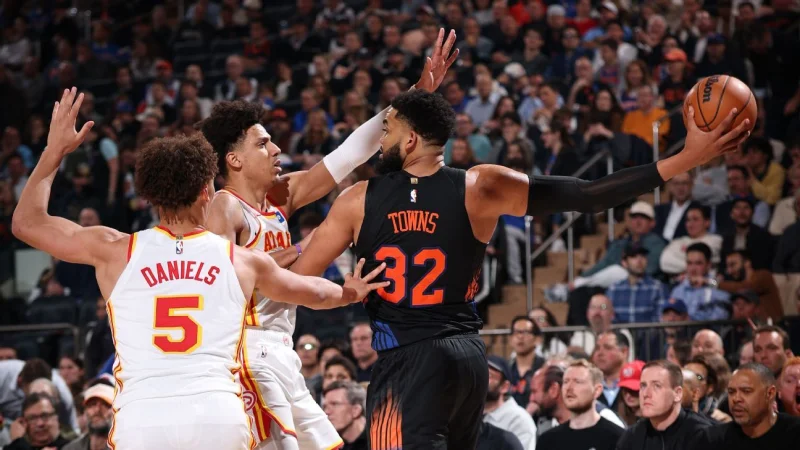
Karl-Anthony Towns asked the New York Knicks to change the offense, and the request came after they had fallen behind 2-1 in the first round. Ahead of Game 4 in Atlanta, Towns told head coach Mike Brown to use him as a passing hub, and the Knicks shifted more of the playmaking load onto him during the playoffs.
The change was not part of some preseason blueprint. It arrived 85 games into the season, when New York needed a turn in a series that had slipped against the Atlanta Hawks. Towns said the point was simple: “Go in there, say how you’re feeling, with your feelings, your idea, and see if it's received.” Brown received it. “And it was received,” Towns said.
The payoff has been immediate and measurable. Since Towns made the request, the Knicks have posted a 137.9 offensive rating with garbage time removed, a mark that stood as the best among playoff teams by 12.3 points. They were breaking point-differential records on a nightly basis during the stretch, a sign that the offense was not just productive but overwhelming opponents possession by possession.
That matters because the Knicks did not stumble into this adjustment in March and refine it over weeks. They made it in the middle of the playoffs, after their first three games against Atlanta left them trailing 2-1, and they are still carrying it forward now. For a team chasing postseason stability, the decision to run more offense through Towns has become one of the defining choices of the series.
The tension in the story is that the Knicks were already deep into the season when the shift happened. At 85 games, most teams are locked into what they are, but New York found a different version of itself only when the pressure was highest. The question now is not whether the request was heard. It was. The question is whether the Knicks will keep trusting the adjustment when the margins get tighter and the series gets harder.
