


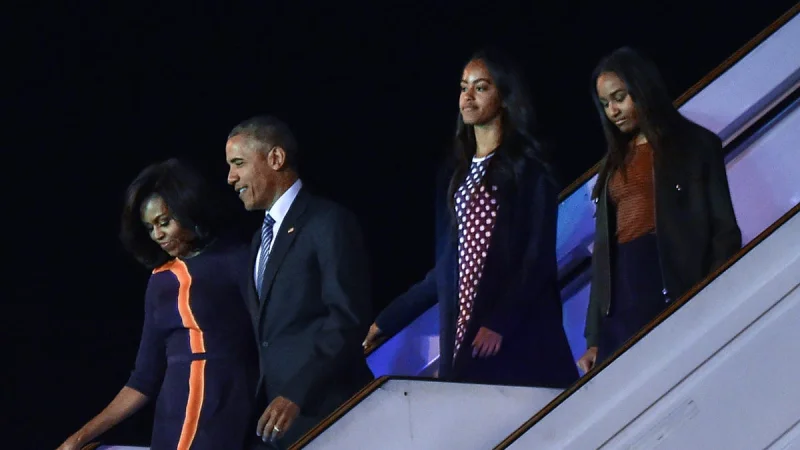
Michelle Obama said raising Sasha Obama and Malia Obama in the White House meant trying to make their lives feel as ordinary as possible, even when the house itself was anything but. Speaking Tuesday, May 19, on Keke Palmer’s podcast “Baby, This is Keke Palmer,” she said the girls could not miss school just because something exciting was happening at the White House.
“With them, it was really just trying to keep them focused on their lives,” Obama said. “They could never miss school or something that they had to do for school because something cool was happening right at the White House.” Malia was 10 and Sasha was 7 when Barack Obama became president in 2009, and their mother said the basic goal was to protect that childhood even as their address changed overnight.
That meant school stayed the center of the calendar. Sasha and Malia traveled with their parents only during breaks, including summers and spring break when they were not at camp, and Obama said the girls still did the kinds of things many children do, from sleepovers to bar mitzvahs. Inviting friends to the White House took getting used to, she said, but it was part of the same effort to keep life recognizable.
The normalcy campaign was tested on the family’s first trip abroad as first family, to Russia, where jet lag turned into a lesson. Obama said the girls had slept for only about three hours and had to get up for work after landing. “I was like, this is crazy. I told [Barack], ‘This is ridiculous,’” she said. Malia, she recalled, told her: “I’ve never felt this bad in my whole life.” Obama answered, “Honey, that’s jet lag.”
After that, she told the team not to schedule trips that required the children to start working immediately after arrival. If the girls had not had their sleep, she said, they would go to the hotel in a separate car. The adjustment sounds small, but it showed how the family had to bend White House logistics around children, not the other way around.
Obama said many of the staff members at the time were young and did not have children of their own, which led to long, messy conversations about how to balance the schedules of adults and children. As the girls got older, the same problem came back in a different form: the Secret Service had to be ready for a Saturday night schedule while still keeping them safe. “It’s a teenage schedule, and it’s kind of chaotic, but you’re making them drive in your car. So now you have to adapt to how they live,” she said. “I don’t need freedom every second. I can operate with a clear schedule. My kids are not going to be forced to do that in their developmental years. They need to learn to live life.”
Her answer was not to lower the rules, but to state them clearly. “You have to teach people what your rules are,” Obama said. That was the job in the White House: not to pretend a president’s children were ordinary, but to give them as much ordinary life as the house would allow. In the end, that is what she said she was protecting — not a public image, but childhood itself.
