


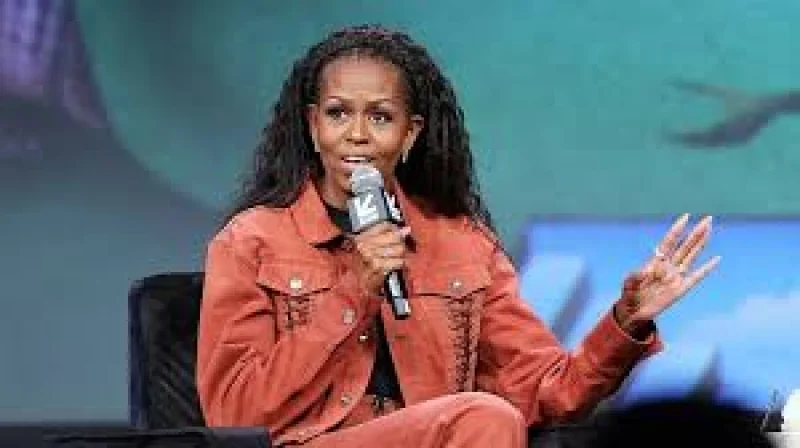
Michelle Obama said millions of Americans who voted for Donald Trump should not be dismissed as racist or written off with simple explanations, telling a podcast audience that frustration, economic strain and disillusionment helped drive his support in 2016 and 2024.
Appearing on Talk Easy with Sam Fragoso, Obama said she was “deeply, deeply disappointed” by both election outcomes, but argued that the reasons behind them are more complicated than many liberals want to admit. “You can’t just pigeonhole them and say you just don’t care and you’re racist,” she said of voters who backed Trump. “This is an act of, ‘I don’t know what else to do.’”
Her remarks landed in a political moment still shaped by Trump’s return to the presidency in 2024, with Democrats and their allies grappling over how to explain support that crosses race, class and region. Obama said many Americans feel abandoned by a system that no longer works for them, and that the country has not fully delivered on the promise of democracy for large sections of the population.

She tied that frustration to widening economic inequality and to the growing squeeze on middle-class families. Obama recalled that after Barack Obama won the presidency in 2008, she felt relief and calm because the country seemed closer to the values she believed it should represent. By contrast, she said the economic footing for many families has worsened since then. “More Americans had more of the basics,” she said. “And that’s becoming less and less.”
That argument also pushed back against a familiar assumption in political debate: that voters who moved from Barack Obama to Trump were acting out of ideology alone. Obama said many people who voted for her husband twice later voted for Trump, and she urged listeners to see those choices through the lens of uncertainty, pressure and a sense of being trapped. “Many Americans feel abandoned by a system that no longer works for them,” she said, underscoring the breadth of the complaint.
Her husband, she said, helped her keep perspective as she processed the election results. But her comments also made clear that the challenge is not just emotional. It is political. If millions of voters are responding to economic hardship and distrust in institutions, then campaigns that reduce them to caricature are missing the point, and missing the next election battle too.
