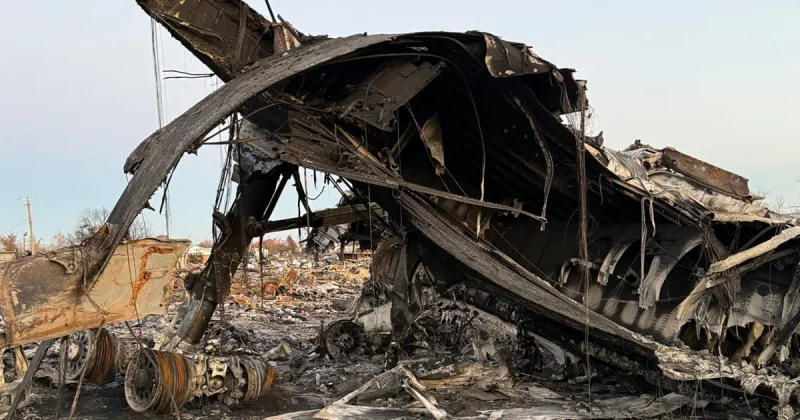
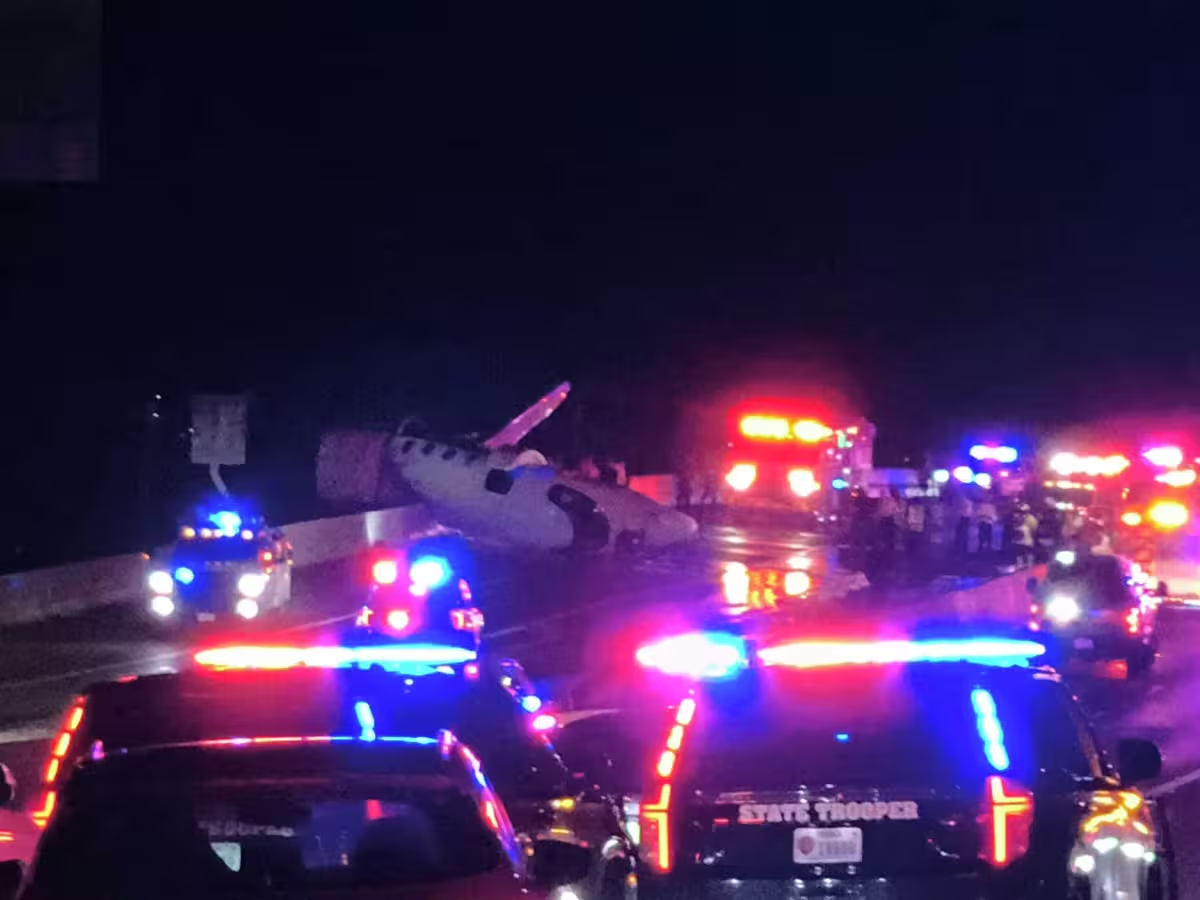
Federal safety investigators opened hearings Tuesday into why the engine flew off a UPS cargo plane last year, a failure that sent the jet crashing in a fireball moments after takeoff from Louisville’s Muhammad Ali International Airport. The National Transportation Safety Board will spend two days examining how the engine separated from the MD-11’s wing as it accelerated down the runway in November and why the underlying flaw was not addressed sooner.
The crash killed 15 people: three pilots on the plane and 12 people on the ground. The plane was bound for Hawaii and was carrying packages and fuel when it had barely left the ground and cleared the airport fence before slamming into several nearby Louisville businesses. Two properties were destroyed, including an auto parts store where four employees and eight customers were killed.
The hearings come as investigators continue to build the technical record behind one of the deadliest cargo-plane disasters in recent U.S. history. Shortly after the Louisville crash, the NTSB said it had found cracks in some of the parts that held the engine to the wing, and those cracks were not caught in regular maintenance. The last close examination of the key engine-mount parts was in October 2021, and the plane was not due for another detailed inspection for roughly 7,000 more takeoffs and landings.
The NTSB has not determined a cause for the accident, Michelle Polk said, and the board’s final report is not expected for more than a year after the crash. The hearings on Tuesday and Wednesday are expected to focus on why the engine separated and why Boeing did not address the flaw sooner. That question matters because the aircraft involved was an MD-11, a model with a long safety history that now sits under intense scrutiny after the Louisville failure.
Sean Garber, who filed a lawsuit against UPS this month seeking financial compensation for the crash, said there has been no closure. “I’m still living, and I’m still here able to fight for the people who aren’t able to fight, and those are the people who are so much more impacted,” he said. “But for me personally, I’ve lost an age of innocence. The world just looks different and I just can’t get that back.”
The crash has also drawn comparisons to a 1979 disaster in Chicago involving a DC-10 that killed 273 people and led to the worldwide grounding of 274 DC-10s. In that case, the NTSB determined that maintenance workers damaged the aircraft while improperly using a forklift to reattach the engine. The parallel is hard to miss: a giant jet, a detached engine, and a chain of missed warnings that ended in catastrophe. One person familiar with the case put it bluntly: “It was just a ticking time bomb by a company that was more concerned about delivering of their employees and the safety of the communi.”
For Louisville, the hearings are not just about an engine mount or a maintenance record. They are about whether the warning signs were visible long before the fireball, and whether the failure that killed 15 people was waiting to happen until the moment the plane tried to leave the runway.