


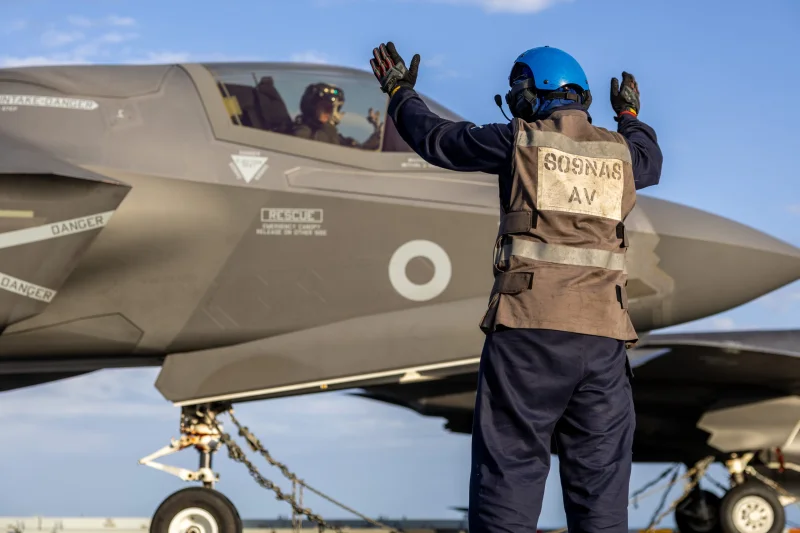
The UK sent 24 F-35B jets onto a Queen Elizabeth-class aircraft carrier during Operation HIGHMAST with spare parts sized for only 12 aircraft, according to a letter dated 30 April 2026 from Jeremy Pocklington to lawmakers. The mismatch, laid out in response to the PAC’s October 2025 report on the country’s F-35 stealth fighter capability, forced planners to lean on other stockpiles to keep the aircraft moving.
The shortfall was eased by drawing on the Deployable Spares Pack and by taking additional parts from the RAF Marham Base Spares Pack, while maritime logistics problems sometimes meant resupply opportunities were missed. Sir Geoffrey Clifton-Brown said the arrangement showed a “half-baked approach” and described it as “entirely unacceptable incompetence” in a system that should give deployed crews reliable supply lines before they go into harm’s way.
The details matter because the deployment did not fail outright. Mission capable rates during Operation HIGHMAST were broadly in line with the global F-35B average, which suggests the fleet could still generate sorties under pressure. But the same letter says post-deployment recovery from the tempo of operations, along with corrosion remediation, has since pulled those rates down. That has put a sharper spotlight on a programme already wrestling with the effects of maritime exposure.
Pocklington said corrosion worsened by sea conditions is now a growing concern across the programme, and that the Ministry of Defence is working with UK and US industry partners on deeper inspections, recovery work, better preventive practices and longer-term corrosion-resistant fixes. The issue is not limited to this one deployment. It goes to how the UK plans to use the lockheed martin f-35 lightning ii at sea, where salt, pace and distance from base all punish weak logistics and maintenance margins.
The letter also pointed to a long-running personnel problem. Engineering posts for the Lightning Force have been increased to 168, split 58% RAF and 42% Royal Navy, but current fill rates stand at about 75%. The RAF plans to fill its remaining posts by 2032, a timeline shaped by the up to three years needed to make an engineer fully competent on the aircraft type. RAF Marham is described as a less preferred posting, and the effort to improve its appeal is now focused on career development and infrastructure investment.
There is one more layer to the story: the UK is still trying to bridge a weapons gap while the fleet matures. Approval has been given to procure the Small Diameter Bomb II through a Foreign Military Sales arrangement with the United States, giving the F-35 an interim precision standoff option until SPEAR-3 enters service. That may solve one capability gap, but it does not answer the harder question exposed by this letter — whether the sustainment model underneath the fleet can keep pace with the way Britain wants to fly it. Pocklington’s answer, at least for now, is no.
