


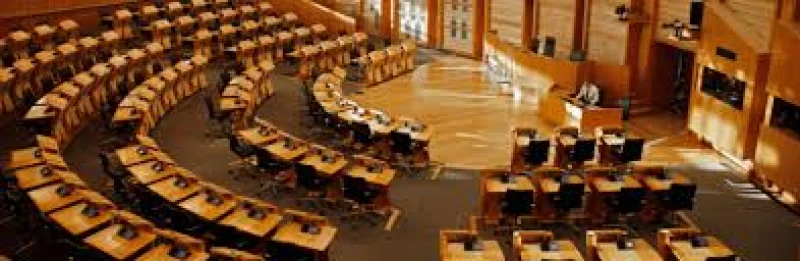
Scotland’s Parliament is expected to move on 19 May 2026 to nominate a candidate for First Minister, the step that begins the formal process of choosing the person who will lead the Scottish government as First Minister and Keeper of the Scottish Seal.
That vote comes after MSPs are sworn in and after a Presiding Officer and two Deputy Presiding Officers have been elected. Under the rules, the Parliament must nominate a First Minister within 28 days of the date of the poll at a general election unless certain intervening circumstances apply, making the timetable one of the tightest pieces of the post-election process.
The legal route was set out in Section 45 and Section 46 of the Scotland Act 1998. Section 45 says the First Minister is appointed by the King from among the members of Parliament, while Section 46 explains when and how the Scottish Parliament must nominate a candidate for that appointment. Once MSPs have selected their candidate, the Presiding Officer recommends to the King that the chosen member be appointed First Minister of Scotland.
The details matter because the voting process is not open-ended. Chapter 4 of the Parliament’s Standing Orders says the date and time for the voting period are determined by the Presiding Officer, and the first round must take place no later than 14 days after the general election. Any member may nominate a candidate, but the nomination must be submitted in writing to the Clerk, seconded by another member, and lodged no later than 30 minutes before the voting period begins.
Only members who have taken the oath of allegiance or made a solemn affirmation may stand as candidates. When the voting period opens, the Presiding Officer announces the names of the candidates, and each member has one vote unless a second round becomes necessary. The result is valid only if more than one quarter of the total number of seats has voted.
There is no complicated threshold hidden in the process. If there is only one candidate, that member is selected with a simple majority of votes in favour. The same rule applies if there are two candidates in a round. A simple majority means more members vote for the proposition than against it, and abstentions do not count.
That leaves the outcome dependent not on ceremony but on arithmetic. The Parliament’s vote will decide who is put forward, and the Presiding Officer will then recommend that person to the King for appointment by Royal Warrant. The new First Minister is sworn in at the Court of Session, where the Warrant is presented to the Lord President.
The process is designed to move quickly after an election and to prevent a prolonged vacuum at the top of the Scottish government. What is expected on 19 May 2026 is not the final appointment itself, but the parliamentary nomination that triggers it. The real decision point is the vote, because that is the moment when the Parliament turns its rules into a choice.
