


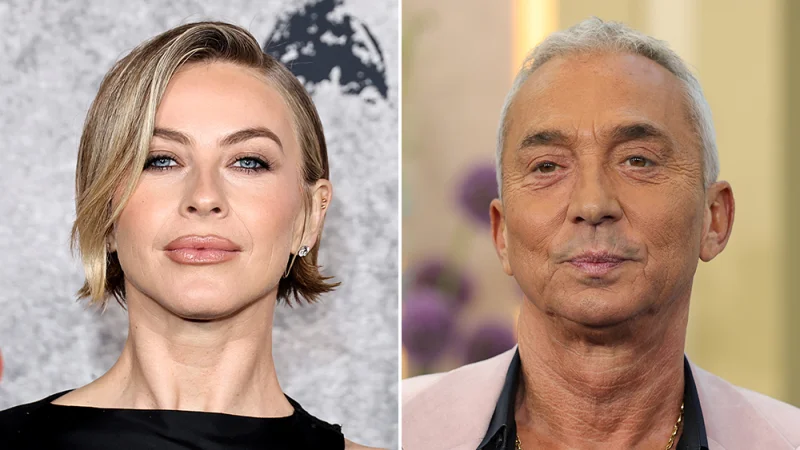
Julianne Hough and Bruno Tonioli stood on the Disney 2026 Upfront stage in New York on May 12 and looked back at a show that many people once expected to fail. The pair spoke about how Dancing with the Stars went from a risky idea in 2005 to a franchise that is still drawing attention two decades later.
Hough said the ballroom competition was turned down many times at the start because people could not imagine whether a dancing show would work. Tonioli, one of the original judges, said that in May 2005 “everybody” was saying it would never happen. But ABC gave it a green light, he said, after Andrea Wong helped push it forward.
The first season aired in 2005 with Tonioli, Carrie Ann Inaba and the late Len Goodman on the judging panel. Kelly Monaco, John O’Hurley, Joey McIntyre, Rachel Hunter, Evander Holyfield and Trista Sutter made up the first cast, and Monaco won the season. What looked at the time like a gamble quickly became something bigger.
Tonioli said the show found its footing by mixing performance, storytelling and audience voting. By the next year, he said, it was “up there with American Idol,” a comparison that captured how quickly the series had broken out of its niche. He said its longevity came from a “beating heart” and from never feeling fake.
That argument was echoed by Hough, who joined the show in 2007 and has seen it evolve from the inside. She said its authenticity, integrity, craftsmanship and sense of transformation have made it timeless, and she pointed to the way it keeps rooting for people to grow and succeed as part of its appeal. Tonioli said the production has stayed fresh by always pushing the bar higher and making it better, with the audience responding to that effort.
The comments came as the franchise prepares to expand again. Dancing with the Stars: The Next Pro is set to premiere on July 13, 2026, on ABC and Hulu, extending a brand that has lasted far longer than the skeptics expected. The tension that surrounded the show at the beginning now sits in the past: the question was whether ballroom television could work at all, and the answer, after 20 years, is that it not only worked but became part of the network’s identity.
Tonioli said the reason it endured was simple. The people making it were there “100%,” he said, with their hearts beating. That may be the clearest explanation yet for why a concept once dismissed as impossible is still on the air and still finding new ways to matter.
