


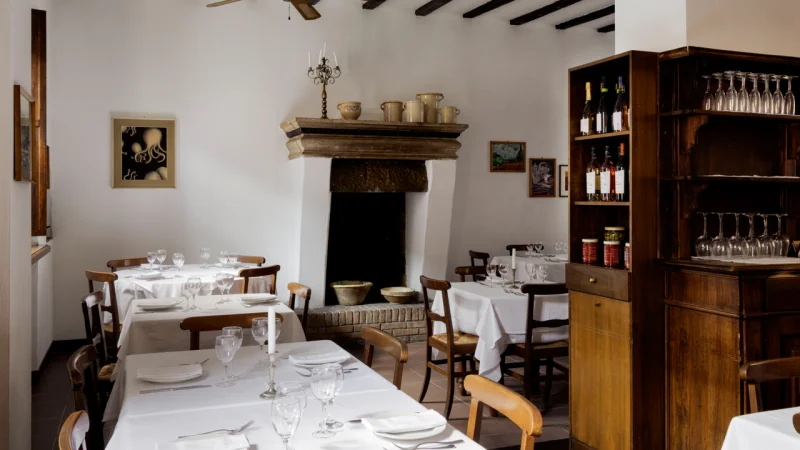
Lu Mare – Trattoria Gallipolina has opened in Milan’s Maciachini area, bringing the seafood cooking of Gallipoli to Via Edoardo Porro 8. The new restaurant from I Salentini is built around the recipes of the fishermen of Gallipoli, with Tony Ingrosso, Francesca Micoccio and Rocco Micoccio behind the project.
The opening gives Milan another clear sign of how deeply Puglian cooking has settled into the city, but this time with a sharper coastal identity. Lu Mare is housed in a former hunting farmhouse that preserves the memory of a historic Milanese structure, a setting that contrasts with the menu’s southern focus and gives the project a local frame.
On the table, the restaurant leans hard into the port-side traditions of Gallipoli. Antipasti include Cozze aperte, Fritti casalinghi with arancini ai frutti di mare and panzerotti, Polpette di polpo and Scapece gallipolina. The first courses run through Orecchiette alla palamita, Tubettoni con cozze and Tria con vongole e fiori di zucca, while the main courses include Polpo alla pignata or fritto, Pesce spada alla gallipolina, Seppia alla griglia and Baccalà con patate.
Prices place the restaurant in a middle range for the city. Antipasti generally cost between 9 and 18 euros, first courses between 14 and 16 euros, and the most expensive main dish goes up to 26 euros. Desserts keep the same regional line, with pasticciotto, lemon sorbet, tiramisù al limone and spumone salentino closing the meal.
The new opening follows an earlier move by the same group, which had already launched Osteria Popolare Pugliese in Milan. That project focused on the landward side of Puglian cooking, while Lu Mare extends the idea toward the sea and the fishermen’s cuisine of Gallipoli. For the group, the shift broadens its presence in Milan and gives its second restaurant a more defined culinary identity.
The contrast is the point. Osteria Popolare Pugliese brought Milan the everyday flavors of inland Puglia; Lu Mare turns toward the coast and tries to make Gallipoli itself the centerpiece of the room. In a city full of regional restaurants, the difference now lies not in the name on the door but in how narrowly a kitchen can tell the story of a place.
