


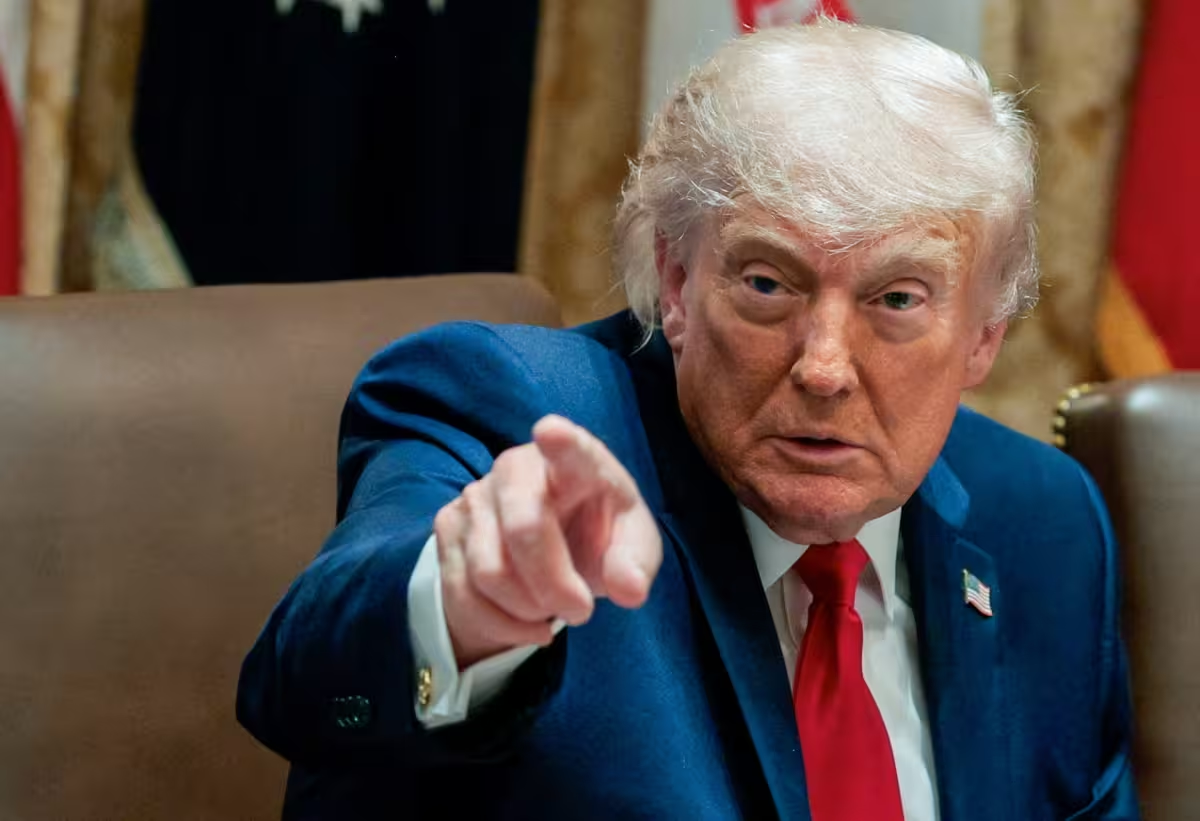
Iran threatened on Monday to answer any attack with "full strength" as President Donald Trump warned that "there won’t be anything left of them" unless a deal to end the war is rushed through. The exchange came as Tehran said it was still pushing diplomacy, even while warning of new "surprises" for any reckless move.
Iranian Foreign Ministry spokesperson Esmaeil Baghaei said the Islamic Republic was continuing to "pursue diplomacy with seriousness," but added that it "will not be subdued by contradictory behavior and threats from the opposing side." He said, "We are fully prepared for every scenario," and warned, "in the event of any reckless action we will respond with full strength, and I assure you that our armed forces will definitely have new 'surprises' for the enemy."
Trump kept up the pressure on his Truth Social platform, where he said the "clock is ticking" to end the war. The warning sharpened a standoff that has left diplomacy hanging by a thread, with both sides publicly insisting they want movement while privately pressing for concessions the other is not ready to make.
Behind the scenes, Iran is understood to have sent its latest peace offer to Washington through Pakistan, which is acting as a mediator. A Pakistani source said the two sides "keep changing their goalposts," a sign of how fragile the talks have become even after multiple rounds of indirect contact.
A senior Iranian source said the United States has shown flexibility on allowing Iran to maintain limited peaceful nuclear activities under the supervision of the International Atomic Energy Agency. But the same source said Washington has so far agreed to free only one quarter of Iran’s frozen assets on a phased timetable, and Tehran wants both positions reconsidered. The latest Iranian proposal again focused on ending the war, reopening the Strait of Hormuz and lifting maritime sanctions, while the most difficult questions on Iran’s nuclear programme and uranium enrichment were left for later rounds.
Baghaei later confirmed that Tehran’s views had been "conveyed to the American side through Pakistan." That leaves the mediator carrying a revised proposal into a negotiation that has yet to bridge the gap between public threats and private compromise, even as the consequences of failure grow more severe by the day.
