



UnitedHealth Group’s stock has bounced 31.24% in a month, but the recovery sits on top of a business that is still taking hard hits. The company said first-quarter earnings per share beat estimates by 9.38%, yet full-year 2025 operating income collapsed 41.26% and net income fell 16.31%.
For investors trying to read the signal in the noise, the key number is not the short-term rally in unh stock. UnitedHealth lost 965,000 Medicare Advantage members in the quarter, and management has already guided to 2026 revenue above $439 billion while planning a decline tied to the exit of 1.3 million to 1.4 million Medicare Advantage members. That is the company’s most profitable line, and it is now being trimmed while the stock trades at a forward price-to-earnings ratio near 20.
The setup matters today because the market is trying to price a company that is no longer operating the way it was a year ago. The first-quarter EPS beat gave bulls something to point to, and the one-month rebound showed how quickly sentiment can turn when a large health insurer posts a surprise on the bottom line. But the core figures tell a different story: lower enrollment, lower income and a revenue path that depends on reshaping the business rather than simply growing it.
That transition is not happening in a vacuum. CMS rate-flat proposals for 2027 threaten to hold UnitedHealth’s most profitable business flat, while the Justice Department is pursuing legal actions tied to Medicare program participation. The company also still carries $799 million in residual cyberattack costs, and Optum Health revenue fell 3% on structurally unprofitable contracts. Those are not temporary headlines; they are pressures that reach into pricing, margins and the next round of guidance.
For all the debate around the stock, UnitedHealth is now being judged on whether it can stabilize earnings while absorbing fewer Medicare Advantage members and a tougher regulatory backdrop. The recent bounce may have rewarded traders, but the numbers underneath it say the company is still in the middle of a reset, not the end of one.
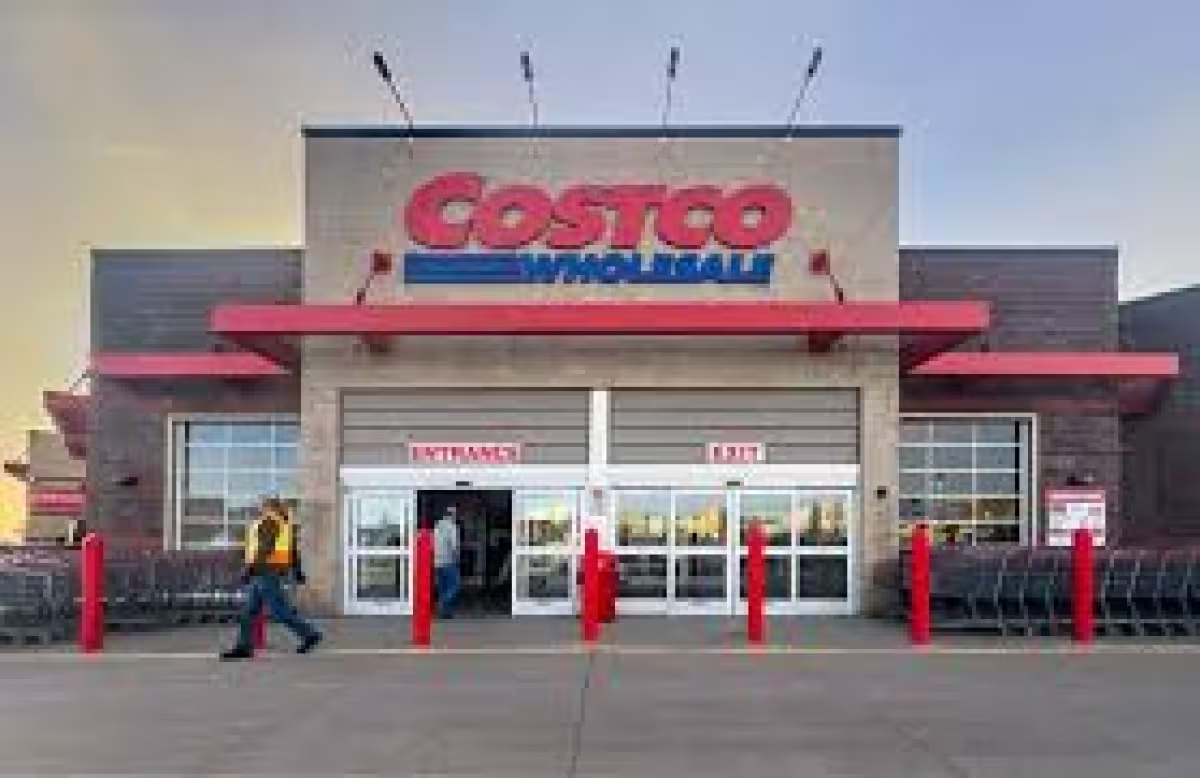
That is why some investors are looking past the insurer altogether and comparing it with steadier cash generators. Procter & Gamble declared its 70th consecutive annual dividend increase, lifting its quarterly payout to $1.0885 after reporting Q3 FY2026 core EPS of $1.59 and revenue of $21.24 billion, up 7.38% year over year, with $3.03 billion in free cash flow. Costco Wholesale also posted $4.69 billion in operating cash flow in Q1, with membership fee income up 13.6% to $1.35 billion, an 89.7% worldwide renewal rate and $17.38 billion in cash on the balance sheet.
Those comparisons sharpen the question around UnitedHealth: whether the current rebound in unh stock is the start of a durable rerating or just a market pause while the company works through a longer and messier repair.
