
US efforts to rebuild rare earth supply chains outside China are opening a new funding path for Australian Strategic Materials and other ASX explorers with the right assets. The shift is being driven by a market China has dominated for decades, and by a sense in Washington that the old arrangement has become too risky to leave untouched.
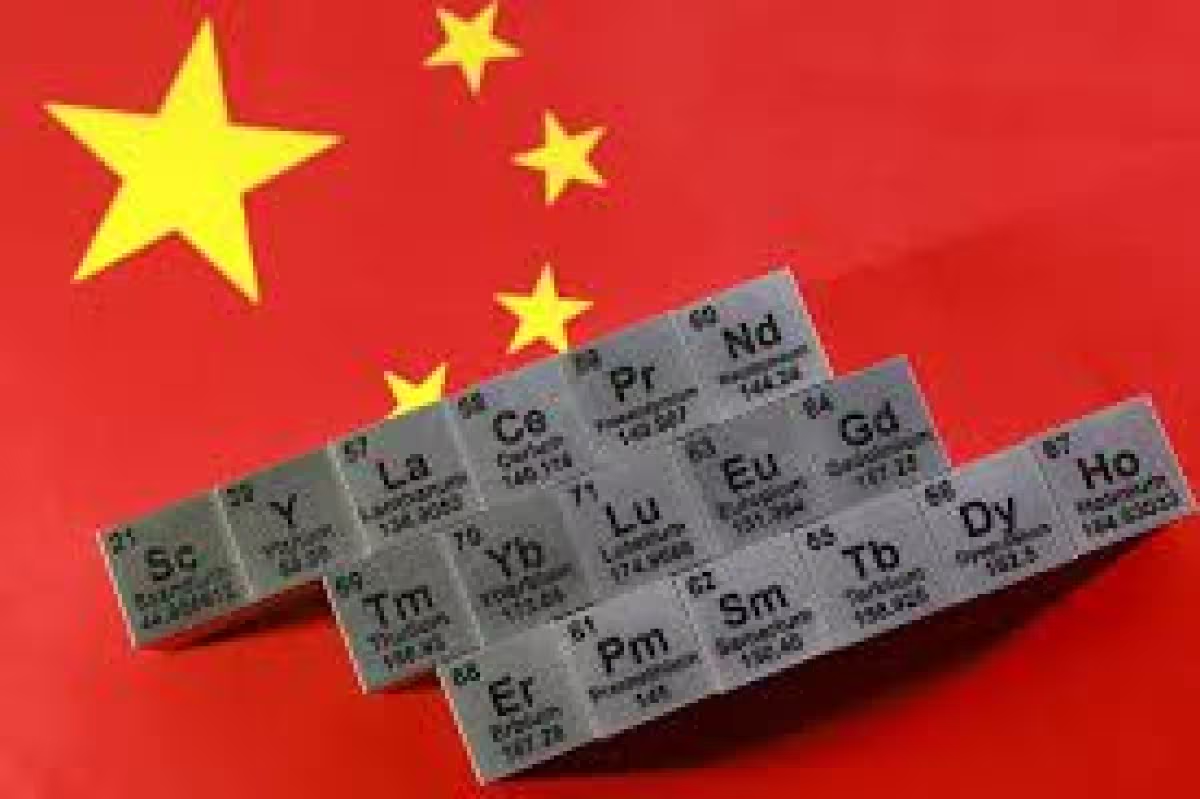
China controls 61% of global rare earth production and 92% of rare earth processing, giving it a grip on the mineral chain that runs from mine to finished material. That dominance has made rare earths, which are used in advanced military systems, clean energy technologies and everyday devices, a strategic problem as much as an industrial one.
The pressure has built in stages. Beijing brought in a new Export Control Law in 2020, then banned the export of its rare earth processing and separation technologies in 2023. In 2025, the policy hardened again, with formal export restrictions placed on many of the most important rare earths, including magnet and heavy rare earths such as dysprosium and terbium. Each move has pushed the United States and its allies to look harder at projects that can break China’s hold on the market.
Last year, Australia and the United States signed the Critical Minerals Framework, a deal that pledged at least US$1 billion in financing for critical mineral projects, including rare earths. It also committed both sides to price-support policies and to faster development of mining, processing and recycling projects. For Australian Strategic Materials and peers, that matters because the money is no longer just a signal of interest; it is a route to capital.
Washington has already shown it is willing to spend. The US Department of Defense and the Department of Commerce have taken direct stakes in MP Materials and USA Rare Earths, and have offered expedited permitting and extra funding to a wider group of companies. Over the last six years, the Defense Department alone has awarded more than US$439 million to companies including Lynas Rare Earths and Noveon Magnetics, with the money used to build processing and magnet manufacturing capacity.
The tension is that the United States still does not have a fully independent rare earth chain, even as it throws money at the problem. China’s monopoly is not only about digging ore out of the ground. It reaches into extraction, separation, processing and manufacturing, which is why new mining projects matter only if they can also move downstream.
That is where Australian Strategic Materials and other ASX explorers come in. The funding window opened by Washington favors companies that can offer more than a deposit in the ground. It favors projects that can help build the missing links between mine and market, and that is the real test now. The money is there, but only for companies with the assets and the scale to help turn policy into supply.