


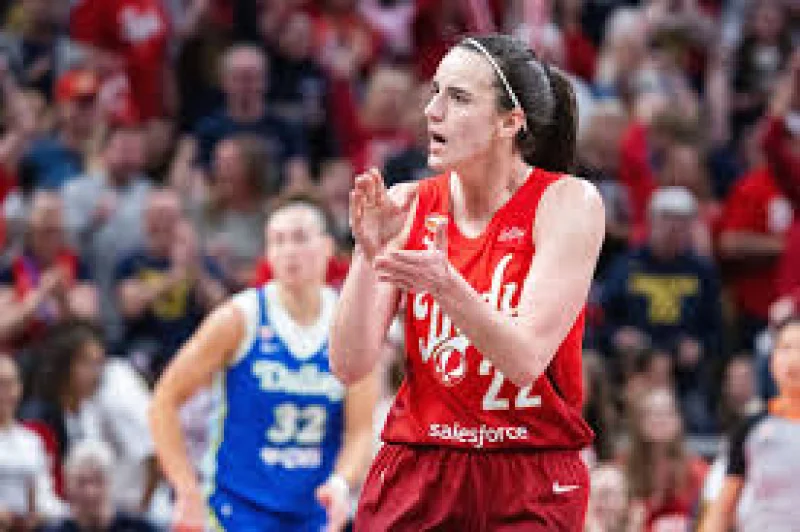
The WNBA corrected Caitlin Clark’s stat sheet after Friday night’s Indiana Fever game against the Washington Mystics, adding two assists that changed more than a box score. One was a wrap-around pass on the baseline to Monique Billings for a 3-pointer in the corner. The other was a shovel pass to Kelsey Mitchell for another 3-pointer.
The correction came before the Indiana Fever were set to play the Seattle Storm on Sunday night at 6 p.m. ET, and the timing mattered because the team used the updated numbers to frame Clark’s place in league history. Indiana said Clark is the first player in WNBA history to record multiple games of 30+ points and 10+ assists, and it also said the corrected stats gave her another record for most career games with 20+ points and 10+ assists.
That claim carried weight because the Fever posted that Clark had 11 career games with 20+ points and 10+ assists before the game against Seattle. Clark was also listed fourth in the league in scoring and second in assists, a combination that has made her statistical standing one of the main storylines around the matchup.
The numbers also sit against a league backdrop that has already raised questions about accuracy. In 2024, the WNBA posted about Clark breaking the single-season assist record, but that post was 16 assists shy of the actual number. The league also promoted the Fever-Storm game with a graphic that featured Raven Johnson rather than Caitlin Clark, Kelsey Mitchell, Aliyah Boston or Sophie Cunningham, a choice that stood out because it came ahead of one of the season’s most watched matchups.
For Clark, the added assists were not a footnote. They were the difference between an incomplete line and one that pushed her deeper into the record book. For the league, the correction again put its handling of her statistics under a brighter spotlight just as Indiana headed into a nationally relevant game in Seattle.
The immediate question now is not whether Clark’s production belongs among the league’s best; the record already answers that. It is whether the official numbers and the way the WNBA presents them can keep pace with the player whose box scores have become part of the league’s nightly conversation.
