


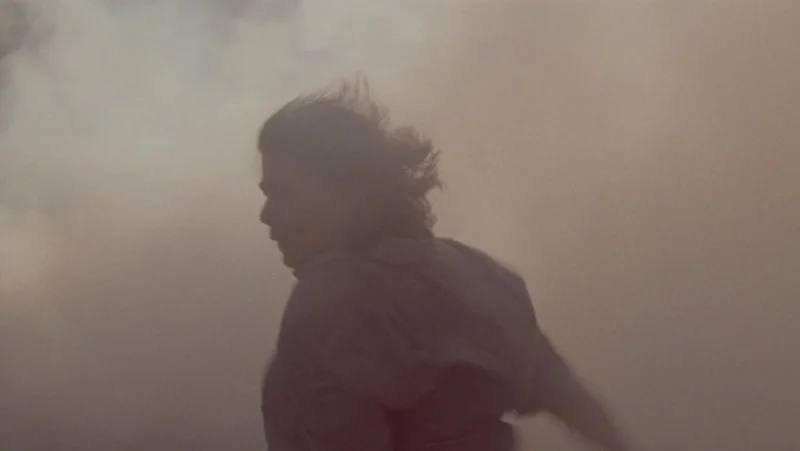
Atonement has had its world premiere at Cannes, bringing Reed Van Dyk’s first feature to the festival with a story about guilt, exile and a mistake that killed three men. The film follows Second lieutenant Lou D’Alessandro, based on Lu Lobello, after a firefight at the start of the Iraq invasion leaves a multigenerational Iraqi family dead.
Those killed were members of the Khachaturian family, inspired by the Kachadoorians in real life, civilians who were trying to find shelter after an explosion damaged parts of their home. Back in the United States, the Marine is left with PTSD and panic attacks, then learns that some surviving Khachaturians have immigrated to the United States and reaches out to ask for forgiveness.
For Van Dyk, the film began in an apartment in Los Angeles, where he read Dexter Filkins’ original story and could not shake it. He later said, “I couldn’t stop crying,” and added, “I was in no position at that time to make a movie.” The path from that reaction to Cannes ran through film school at UCLA, where he made shorts including DeKalb Elementary, which received an Oscar nomination in 2018.
He kept returning to the material. Van Dyk flew to New York to have dinner with Filkins, drove to Las Vegas to sit with Lobello and spent years talking with the people involved and getting their blessing. He also said the Kachadoorians lived only 20 minutes from him in Los Angeles, a proximity that made the story harder to treat as distant history. “It was a beautiful process of, over years, talking to them, getting their blessing,” he said.
That long build-up mattered because Atonement is not structured as a conventional battlefield drama. The source material is a New Yorker article by Filkins, and Van Dyk wanted to avoid Hollywood’s familiar war-movie language in favor of something closer to what the invasion looked like on the ground. He called the film “backdrop for American stories” in the sense he wanted to resist, and said, “it is their side, our side. Who’s up and who’s down.”
To shape that point of view, Van Dyk and his cinematographer traveled to Baghdad on a scouting trip and used a reading list from Iraqi authors. The six-hour documentary Homeland: Iraq Year Zero by Abbas Fahdel was also a principal source, and he spoke with Marines to make the opening firefight feel grounded rather than stylized. His goal, he said, was to make the sequence “closer to the truth than I’m accustomed to seeing in movie.”
The tension in the film is not only in the shooting itself, but in what comes after: a man trying to live with what he did, and a family deciding whether forgiveness is even possible. Van Dyk said he did not want to reopen wounds unless he was sure he was ready “to breathe life into this as a film.” Cannes has now given that effort its first public test, and the answer is plain: this is a war story built less on combat than on the cost that follows it home.
