


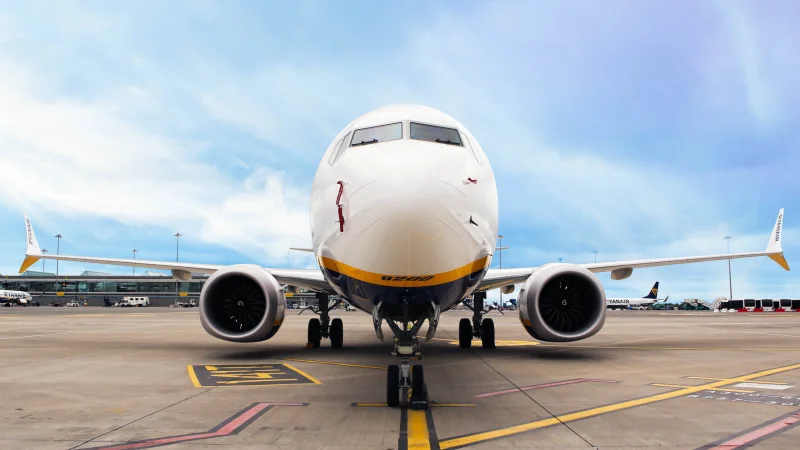
Ryanair said it will close its three aircraft Thessaloniki base for Winter ’26, blaming a 66% rise in airport charges by Fraport Greece after the pandemic. The airline said the move follows what it described as the operator’s failure to pass on a 75% cut in Greece’s Airport Development Fee to airlines and passengers.
The Irish carrier said the Greek government had reduced the fee to support year-round connectivity and tourism across the country, but said Fraport Greece did not reflect that reduction in its own charges. Ryanair said it wants to grow in Greece if airport charges are frozen and the fee cut is passed through, and it urged the Greek government to break up what it called Fraport Greece’s monopoly.
The decision lands as Ryanair keeps pushing elsewhere in its network. On 1 August, it celebrated the first flight from Prague to Paphos. It also said it would launch a twice weekly service to Kosice on Monday 3 August, alongside a seat sale with fares from 729 Kc for Kosice and from 759 Kc to Paphos. Those fares were available until the end of October and had to be booked by Wednesday 5 August on Ryanair.com.
The contrast is sharp: Ryanair is trimming Thessaloniki while adding routes and discounting seats elsewhere. That makes the central issue not whether the airline is retreating from Greece altogether, but whether its base in Thessaloniki can survive under the airport pricing regime Ryanair says is blocking growth. Ryanair compared Greece with Albania, regional Italy, Slovakia and Sweden, saying those markets are lowering airport fees and abolishing taxes to keep traffic moving.
Ryanair’s message to Athens is direct. If Fraport Greece freezes charges and passes on the Airport Development Fee reduction, the airline says it is willing to grow in Greece. If not, Winter ’26 will mark the loss of one of its Thessaloniki bases, and a fresh test of how much traffic the carrier is prepared to keep in a market it says should be expanding, not shrinking.
