


Seattle and Tacoma are headed for a sticky, summerlike Tuesday, with temperatures expected to surge into the low 80s as heat and humidity build across western Washington. The warmup on May 12 is expected to land about 15 degrees above average for mid-May.
The combination of unusual warmth and humidity is expected to qualify as a short-lived heatwave for Puget Sound, and the day may feel more like a midsummer stretch than a spring afternoon. By Tuesday evening, building cumulonimbus clouds are expected around the region, setting up the best chance for thunderstorms Tuesday night into Wednesday morning.
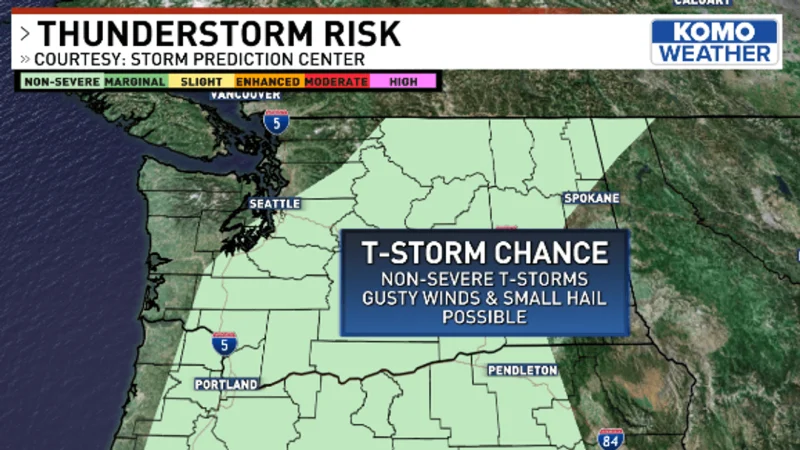
The storm window is expected to be strongest from the Cascade crest into eastern Washington, where the National Storm Prediction Center has highlighted the region for non-severe thunderstorm development during that time frame. Gusty winds, small hail and hundreds of lightning strikes are all possible, making this one of the more active weather setups to move through the state so far this season.
That matters because the Northwest usually sheds heat with a marine push, not thunderstorms, and this time the pattern is expected to break differently. The weather setup is unusual for western Washington, where warmth and humidity are combining before the atmosphere flips toward storms instead of a cooling sea breeze.
The lightning threat also raises concern about early-season wildfire starts in the Pacific Northwest, especially in places where dry fuels can catch quickly. After the thunderstorms taper off, cooler and more benign spring showers may return at times for the rest of the week, bringing the region back toward a more familiar May rhythm.
For now, the answer to whether Seattle weather stays simply hot is no: the heat arrives first, but thunderstorms are expected to interrupt it late Tuesday and early Wednesday, with the clearest risk concentrated east of the Cascades.
