


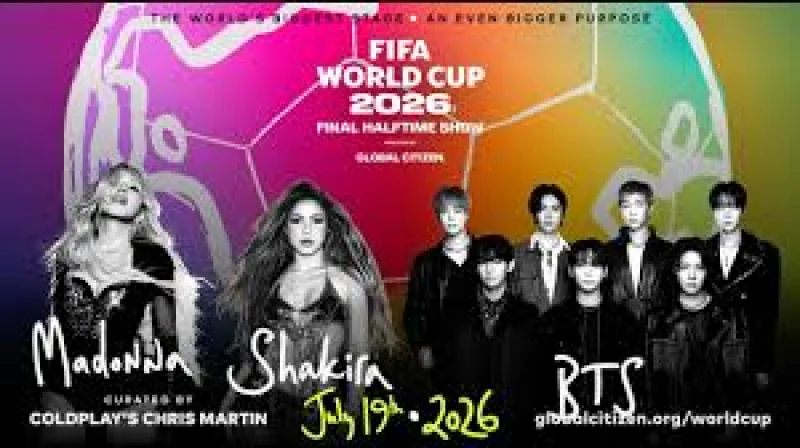
Madonna, Shakira and BTS will headline the first half-time show ever staged at a World Cup final, with the performance set for New Jersey on 19 July. The show has been curated by Coldplay's Chris Martin and is tied to a fundraising push for children worldwide.
The understands the performance will last 11 minutes, even as there have been reports it could run beyond 15 minutes. That matters because the laws of the game say the interval should not exceed 15 minutes, and last summer's Club World Cup final between Chelsea and Paris St-Germain stretched to more than 24 minutes at halftime.
The final is part of a tournament co-hosted by the United States, Canada and Mexico, and the half-time slot adds a new layer to a match already built around the world's biggest audience. Fifa has linked the show to the Global Citizen Education Fund, which is working to raise $100m for children worldwide. In March 2026, Fifa president Gianni Infantino said the performance would be “a historic moment for the Fifa World Cup, befitting the biggest sporting event in the world.”
For Shakira, the final brings another return to the sport's biggest stage. She is due to release her official World Cup song, Dai Dai, on Thursday, with Nigerian singer Burna Boy featured on the track. The Colombian singer also delivered Waka Waka (This Time for Africa) for the 2010 tournament in South Africa, a song that became one of the most recognisable World Cup anthems of the modern era.
Madonna is also arriving on the back of a major release plan of her own, with her 15th album, Confessions II, set for 3 July. BTS, meanwhile, come into the show as the best-selling music act in South Korean history, with more than 45 million albums sold. The seven members also shared a UK number three hit with Coldplay in 2021 on My Universe, after the group was making its comeback from a three-year music hiatus to complete mandatory military service.
The K-pop group will be in the middle of an 85-date world tour when they perform in New Jersey, a reminder of how tightly packed the schedule is for the three acts. That leaves the World Cup final trying to balance a live entertainment spectacle with the practical limits of a football interval. The show is meant to raise money and create a moment, but the tighter question is whether the sport can absorb a halftime show without testing the boundary of the world cup 2026 dates themselves.
