


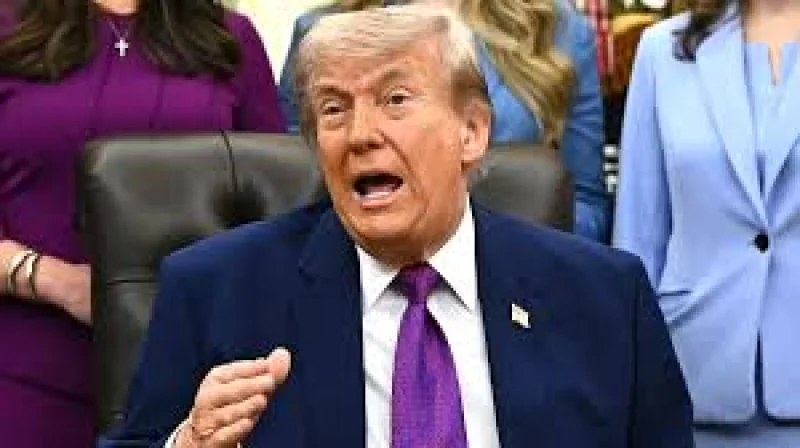
President Donald Trump defended Chinese ownership of American farmland on Thursday, a sharp break from years of Republican efforts to block it. Speaking to host Sean Hannity during an excursion to China, Trump also repeated his view that Chinese students should be allowed to study in the United States.
Trump’s remarks landed in the middle of a fight his own party helped ignite. Texas and Florida have already passed laws explicitly banning the sale of some lands, especially farmland, to Chinese investors, and the Agriculture Department said last year it would crack down on Chinese farm ownership in the United States. Trump himself campaigned in 2024 on a pledge to stop China from buying American farmland, making his comments a political reversal that was impossible for his allies to miss.

The president did not sound like a man retreating from the issue so much as one trying to recast it. “I could tell them I don't want any students but...” he said, then added, “drain the swamp,” borrowing a phrase that has long served as shorthand for hard-line populist politics. But the line rang hollow for many conservatives because the MAGA movement has spent years portraying Chinese land ownership in the United States as both an economic threat and a national security danger.
That tension has only deepened as the Trump administration moved to strip visas from Chinese students while Vice President JD Vance condemned foreign students at American universities. Against that backdrop, Trump’s defense of Chinese farm ownership was not just a policy detour. It cut against the rhetoric that helped power his return to office and undercut the argument that every part of the movement is marching in the same direction.
Reaction from prominent conservatives was disheartened or openly furious, a sign that the dispute reaches beyond one interview clip. Farmers have also been under pressure from Trump’s tariffs and war with Iran, which critics say have devastated the U.S. farm industry and fueled more backlash in rural America. The president may still believe he can separate Chinese students from Chinese land ownership. His base is making clear that, on this issue, the two are harder to untangle than he seems to think.
