


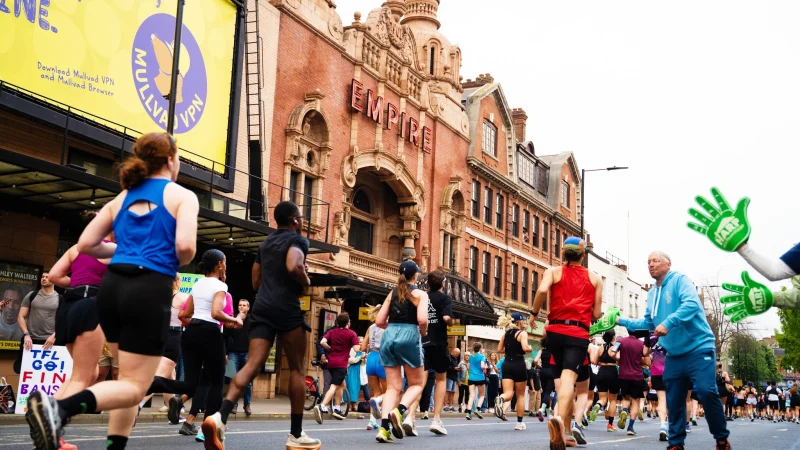
Broadway Market traders have urged Hackney Council to review how the Hackney Half is managed after the race was moved off their street, saying the change has cut into one of their busiest days of the year. On Sunday 17 May, more than 25,000 participants are set to run through Dalston, Homerton and London Fields instead.
The shift ends a run that, until 2025, took runners over the Regent’s Canal and up Broadway Market, where spectators once lined the route. Twenty-three businesses wrote to the council asking it to seriously consider restoring the original course.
The race has taken place in Hackney since 2014, but the route change has reopened a dispute over how much the event should bend around the market and how much the market should adapt to the event. Hackney Council moved the course away from Broadway Market to make room for the Sunday street market it opened there five years ago.
For some traders, the numbers are stark. Alex Bloom said Aya & Suki would usually take about £3,000 on a Hackney Half day, but when the food market ran last year the takings fell to about £500. “This is the one day we make money,” Bloom said.
William Cheshire, who runs a bespoke jewellery business and on-site workshop on Broadway Market, called the issue “a real crunch point,” saying the atmosphere on race day is “fantastic because you get supporters cheering and echoing around the buildings” and that it is “a big part of the community.” Stephane Cusset, who has traded on the market for over two decades and runs the delicatessen and café L’eau à La Bouche at the market’s mid-point, said he had seen the difference first-hand. “We just made so much more on the Hackney Half when there was no Sunday market,” he said. “It was a really good day for businesses because it was so busy on the street.”
Broadway Market is a Victorian street bazaar lined with independent shops, cafes, restaurants and bars, and the race-day crowd has long been part of its commercial rhythm. The council’s decision to move the route was meant to protect the Sunday market, but for the traders who signed the letter, it has also removed the burst of trade that came with spectators and runners passing through.
That leaves a familiar London compromise in sharper focus: a local event built up over years now shares a space that another local economy depends on. The council is under pressure to decide whether the current arrangement can work for both, or whether the race will eventually return to Broadway Market.
