


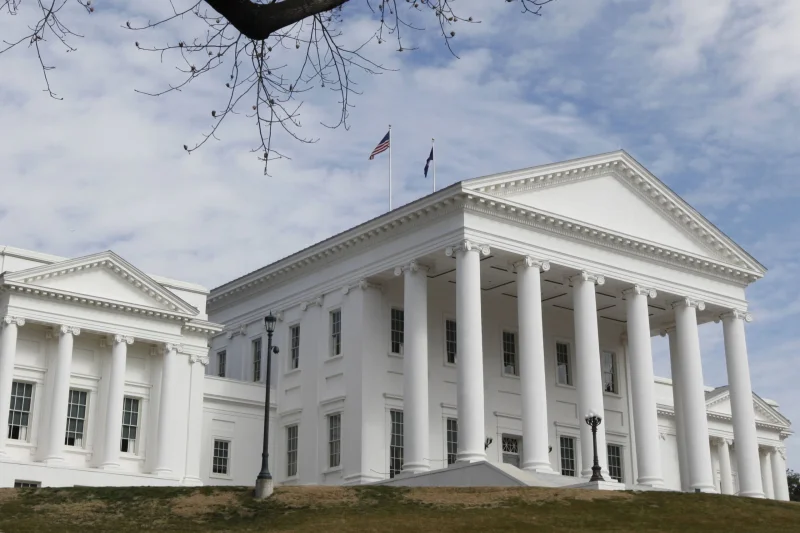
Virginia Democrats have filed an emergency appeal with the U.S. Supreme Court after the state’s top court struck down their redistricting push in a 4-3 opinion issued Friday morning. The move sets up a fast-moving fight over whether the state’s congressional map will stay in place for this year’s elections.
Gov. Abigail Spanberger said Wednesday that the May 12 deadline for any map changes means Virginia will run this year’s elections on the current map, with early voting beginning next month. Virginia’s primaries are scheduled for Aug. 4, and the November general election will follow under that same calendar unless the high court intervenes.
The dispute centers on a Democrat-led effort to change Virginia’s congressional map. Experts said the plan Democrats proposed could have produced a 10-1 Democratic majority in the state’s U.S. House delegation, a result that would have sharply altered the political balance of the delegation. Republicans challenged the process Democrats in the General Assembly used to put the constitutional amendment before voters, and the state court ultimately sided with those challengers.
Chief Justice John Roberts gave Republicans until Thursday evening to respond to Democrats’ emergency appeal, keeping the matter on an accelerated track at a moment when election planning is already underway. The case arrived after over three million people took part in a rare April special election on the redistricting issue, underscoring how much attention the fight has drawn inside Virginia.

Spanberger said she wanted a different outcome from the state court, but argued that the focus now has to shift to the races ahead. “What needs to happen is we need to focus on the task at hand, which is winning races in November,” she said. She added, “I believe, somewhat doggedly, that we will win two to four seats in the House of Representatives. … That is my goal. That is what I know is possible.”
She also said voters should not walk away from the episode discouraged. Spanberger said people have “had the experience of casting a ballot in an election that was very important to them, including those on both sides of the referendum vote, only to have it be overturned, essentially, by the Supreme Court of Virginia.” Her message, she said, is “that people know that their votes do matter, and that when it comes to the ballot they’re going to cast — whether it’s for a primary over the summer or for the general election into the fall — that they shouldn’t feel depleted or defeated, that their votes matter.”
For now, though, the practical answer is already taking shape. Spanberger said the state will proceed with elections on the current maps, and that early voting will begin next month. The emergency appeal may still change the legal landscape, but it no longer changes the immediate election schedule. Virginia is moving ahead.
For more on related court actions, see Redistricting In Virginia halted by Supreme Court after emergency appeal, Edward Busby execution cleared by Supreme Court after stay lifted, and Oklahoma judge sets $500,000 Bail for Richard Glossip after Supreme Court reversal.
