


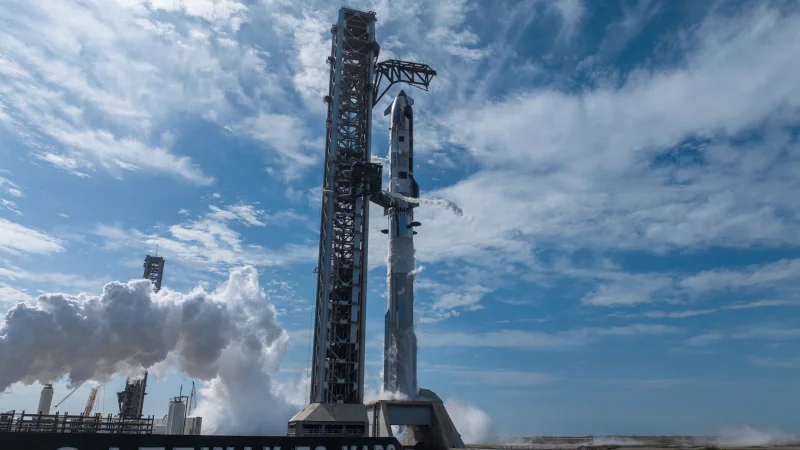
SpaceX is targeting May 19 for the debut launch of Starship V3 from Starbase in South Texas, with the launch window opening at 6:30 p.m. EDT and running for 90 minutes. The flight will be Starship’s 12th overall, and it will be the first time the company sends up the bigger, more capable V3 version of the rocket.
The mission matters because SpaceX is using it to test a long list of changes at once. Starship V3 is powered by the V3 Raptor and comes with a clean-sheet redesign of its propulsion system, updates that SpaceX says allow a new startup method, greater propellant tank volume and a stronger reaction control system for steering in flight. The upper stage also has propellant feed connections to support off-Earth fuel transfer, an important step for future space exploration plans.
The Super Heavy first stage has been reworked too. It now uses three grid fins instead of the original four, and SpaceX says each fin is 50% larger and significantly stronger. The hot stage that joins the booster to the Ship upper stage is now integrated into Super Heavy and will not be discarded during flight. The booster’s fuel transfer tube has also been completely redesigned and is now roughly the size of a Falcon 9 first stage, a change SpaceX says will let all 33 engines start up simultaneously and support faster, more reliable flip maneuvers.
The timing gives the launch extra weight. SpaceX announced on May 12 that it was targeting May 19 for the debut, and the coming maiden flight will also mark the debut of Starbase’s Pad 2. Starship is already described by the company as the biggest and most powerful rocket ever built, and V3 is being positioned as the next step in that effort rather than a routine repeat test.
That makes the central question less about whether the rocket is ready and more about how much of the new design SpaceX can prove on the first try. A first flight for a vehicle with this many changes usually shows what survived the hardware review and what still needs work. For SpaceX, May 19 is not just another launch date. It is the first live check on whether Starship V3 can match the company’s ambitions for a larger rocket, a stronger booster and a system built for fuel transfer beyond Earth.
