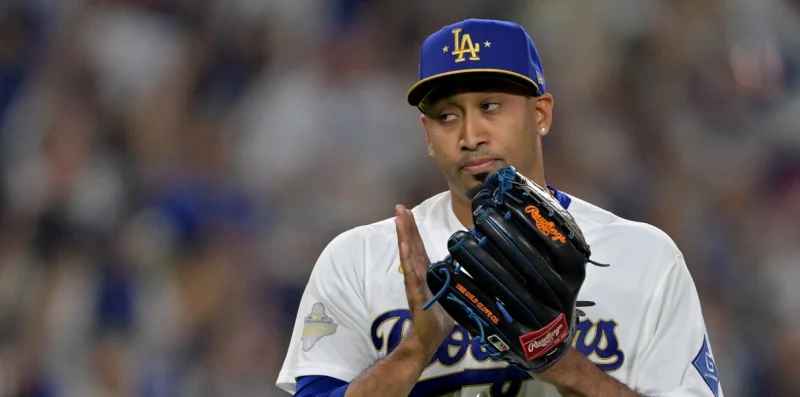
Los Angeles Dodgers reliever Edwin Díaz is facing off-field scrutiny after published accounts linked him to cockfighting-related promotional posts and a Puerto Rico tournament appearance, raising questions about whether Major League Baseball or the club will review the matter. No criminal charge or league discipline involving Díaz had been publicly announced as of Saturday morning ET.
What Has Been Alleged About Díaz
The controversy centers on social media images promoting cockfighting events in Puerto Rico that appeared to use Díaz’s likeness while showing him in a Dodgers uniform. Separate accounts also described a March interview in which Díaz discussed his family’s longtime connection to the sport and said relatives had entered roosters in a recent tournament.
The key distinction is that public attention has moved faster than any official process. The available information shows a prominent athlete being associated with cockfighting-related events and comments, but it does not establish that he organized an event, ran a gambling operation or has been charged with a crime.
That uncertainty is central to the story. Cockfighting is illegal under federal law in Puerto Rico, but cultural familiarity with the practice has remained strong in parts of the island, where it was once openly regulated before the federal ban took effect.
Why Cockfighting Is Illegal In Puerto Rico
Cockfighting was banned across all U.S. states and territories under federal law, with enforcement applying to Puerto Rico after a phase-in period that ended in 2019. The ban made it illegal to sponsor, exhibit or participate in animal fighting ventures, and it also restricted related activities involving birds used for fighting.
Puerto Rico had long treated cockfighting as part of local tradition, with arenas, breeders and betting activity tied to the sport before the federal prohibition. Supporters framed it as a cultural and economic practice, while animal-welfare advocates pushed for the ban because roosters are fitted with blades or spurs and forced to fight, often to death or serious injury.
That history helps explain why the Díaz matter has drawn attention beyond baseball. The issue is not only whether a player’s name or image appeared in promotional material, but whether a high-profile athlete was publicly connected to a practice that federal law now treats as illegal animal fighting.
Dodgers Face An Unwanted Distraction
For the Dodgers, the controversy arrives while Díaz is already sidelined. The right-hander was moved to the 60-day injured list in May after elbow trouble, interrupting his first season with Los Angeles and leaving the bullpen without the late-inning stability the club expected when it added him.

Díaz signed with the Dodgers after a career that included elite seasons with Seattle and New York, multiple All-Star selections and a reputation as one of baseball’s most recognizable closers. His entrance music and high-strikeout performances made him a fan favorite, but his 2026 season has been uneven on the field and now complicated off it.
The Dodgers have not publicly announced discipline tied to the cockfighting claims. The club’s immediate baseball concern remains his recovery timeline, but reputational issues involving animal fighting can quickly become broader organizational matters, especially when team branding appears in disputed promotional material.
MLB Could Review Personal Conduct Questions
Major League Baseball has broad authority to review off-field conduct when player behavior risks damaging the sport’s reputation or violating league policies. Whether that happens here depends on what league officials can confirm, including whether Díaz authorized the use of his image, attended an illegal event, participated in banned activity or was merely referenced by others.
A formal investigation would likely focus on documentation, event dates, the location of any tournaments, the use of Dodgers imagery and any statements made by Díaz or people connected to him. The league would also need to weigh the difference between cultural commentary, family history and active involvement in conduct prohibited by law.
As of Saturday morning ET, there was no public record of a criminal case against Díaz connected to the allegations. That does not end the matter, but it places the story in a developing category rather than a confirmed disciplinary case.
Why The Story Has Gained Traction
The reaction has been sharp because the allegations combine several high-interest elements: a star player, the defending spotlight around the Dodgers, animal cruelty concerns and Puerto Rico’s complicated legal history with cockfighting. For many fans, the issue is straightforward because the practice is banned. For others familiar with Puerto Rico’s past regulation of the sport, the controversy also reflects a cultural clash that intensified after federal law overrode local policy.
Public backlash can carry consequences even without charges. Sponsors, teams and leagues often respond to conduct controversies based on reputational risk, not only legal outcomes. Animal-welfare groups may also increase pressure if more evidence emerges linking prominent athletes to cockfighting events.
The next steps are likely to come from one of three places: Díaz or his representatives clarifying his role, the Dodgers addressing whether team imagery was used without authorization, or MLB determining whether the matter warrants review under league rules. Until then, the confirmed picture remains narrower than the online reaction: Díaz has been linked to cockfighting-related material and comments, but no official finding against him has been announced.