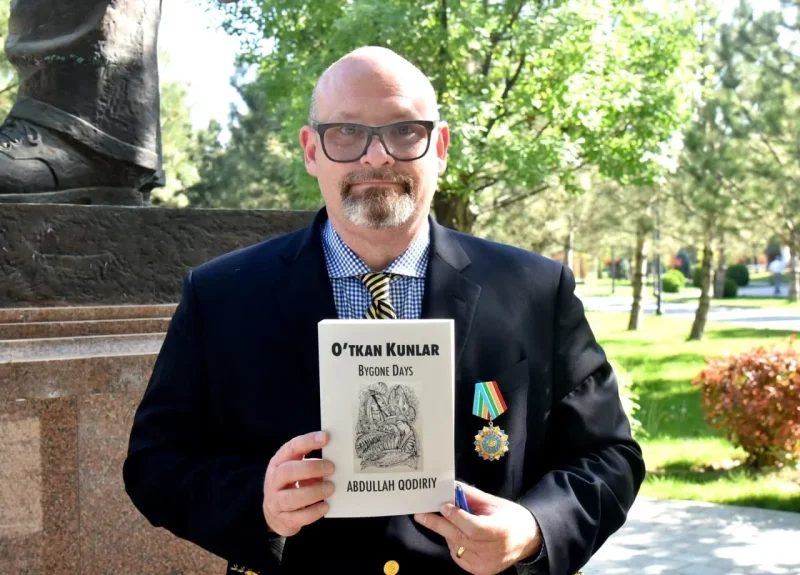
A court in Uzbekistan has ordered an employee of the Uzbekistan State World Languages University to pay Mark Reese 20.6 million Uzbekistani som, or about $1,700, after ruling that his translated work had been distributed without permission. The decision in Tashkent gives Reese a legal win in a copyright fight over his English version of O'tkan Kunlar, also known as Bygone Days.
Reese filed the lawsuit in April after learning that an electronic copy of his translation was being circulated without authorization. The Uchtepa Interdistrict Court for Civil Cases found in his favor after officials uncovered evidence of copyright violations at the university. The case adds fresh attention to unauthorized online distribution in uzbekistan, where translated works can move quickly beyond the control of their authors.
The ruling is the latest turn in a dispute that has stretched across several years and institutions. Reese spent more than 15 years translating Abdulla Qodiriy’s novel, which is widely regarded as a cornerstone of Uzbek literature and was described as the first English-language edition of the book. In the 1990s, he first came to Uzbekistan as a Peace Corps volunteer, and the country later awarded him the Order of Friendship in 2019 for promoting Uzbek culture abroad.
After discovering what he said was an unauthorized electronic version, Reese appealed to the Ministry of Justice. Investigators then found evidence of violations at the university, leading to administrative proceedings against a responsible employee under Article 177¹ of Uzbekistan’s Administrative Responsibility Code. In an earlier decision, that employee was fined 2.06 million som, or about $170, and the university was ordered to remove the electronic copy from the Unilibrary.uz platform.
Reese’s account of how the book circulated underscores the awkward gap between gratitude and permission. During later visits, he donated signed copies of Bygone Days to universities and state institutions, saying recipients were told the books were not to be reproduced or redistributed. He said, “All parties asked how they could support my work,” and added, “I presented a copy and explained that they could purchase more at a steep discount.”
Under Uzbek law, copyright holders can seek statutory compensation ranging from 20 to 1,000 times the base calculation amount instead of proving direct damages. That framework allowed Reese to seek damages in April without having to attach a precise commercial loss to the unauthorized copying. For readers following the broader issue, the case shows how a single translated novel can become a test of whether cultural recognition also means respect for copyright. Related background can be found in Ouzbékistan prépare un premier Mondial et hérite d'un groupe piégeux.
The court’s order gives Reese compensation, but the wider question is whether institutions that celebrate foreign translators will also police how their work is stored, shared and reproduced. For now, the answer in this case was no, and the bill went to a university employee in Tashkent.