


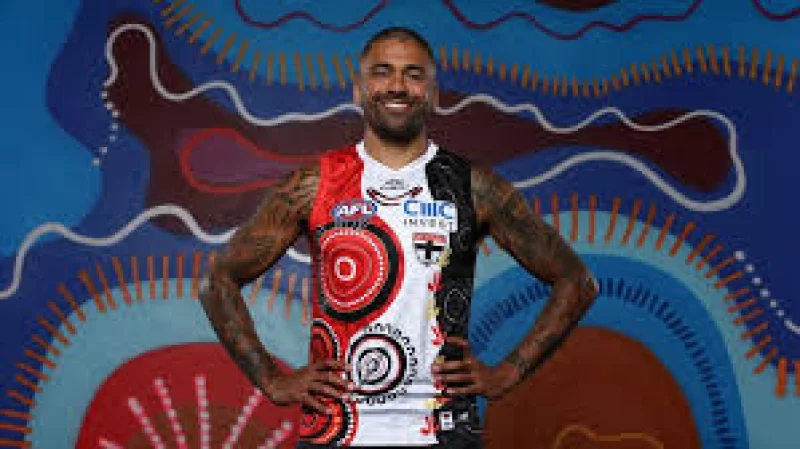
Bradley Hill has spent 15 seasons in the AFL, but the way he is being talked about now has less to do with the premierships he won and more to do with the role he has taken on away from the ball. The 33-year-old has become an unofficial leader and big brother for Indigenous players across the league, a figure younger players lean on when the football world gets loud.
Hill, who burst onto the AFL scene in 2012 as an 18-year-old and won three consecutive flags with Hawthorn in his second, third and fourth seasons, said the responsibility has grown naturally as he has aged. “I am the oldest one now, so they have to listen to me,” he said. “It’s just come naturally. As I’ve got a bit older, I’ve just taken it on board, and I want to be there for them and to be a support for them, whether they play for my team or not.”
That pull is not abstract. Earlier this year, Hill accompanied Kysaiah Pickett, Shai Bolton, Lawson Humphries and Charlie Cameron to a Q&A at an Indigenous high school in Perth, one more sign that his influence now stretches beyond any one club. He said he enjoys those connections and wants to be there if players ever need anything. “I feel like it’s something I really enjoy, making those connections and being there for them if they ever need anything,” he said.
Hill is not speaking from the outside. When he was a young Hawk, he had senior Indigenous players such as Shaun Burgoyne, Lance Franklin, Cyril Rioli and Chance Bateman to help him adjust to AFL life after being drafted to the other side of the country. That support, he said, shaped the way he now deals with younger players coming through the system. “I still am a little bit cheeky,” he said. “You naturally mature as you get a bit older, and as a young kid, you’re just having fun and enjoying the moment and having a laugh. And as you get older, you have kids and you have to think about other things.”
The importance of that voice has also shown up in sharper moments. Hill recently called out coach Ross Lyon after taking offence to a remark made at training, a reminder that his role is not only about mentoring but about speaking up when needed. Asked whether his relationship with Lyon made that easier, he said, “Nah definitely not.” He added that maturity has changed how he handles things: “The relationship helps, but now that I’m older – even if it wasn’t Ross, I would still say the same thing,” and, “With maturity, you’ve got your own voice. And if you think if something’s not right, you definitely stand up and say something.”
That voice matters at Euro-Yroke, where the Indigenous presence is unusually strong in 2026. Seven of the 62 Indigenous AFL players are on the club’s list, including Liam Ryan, who joined the side in 2026, along with Nasiah Wanganeen-Milera, Isaac Keeler, Liam Henry, Marcus Windhager and Lance Collard. J’Noemi Anderson plays for the Euro-Yroke AFLW team. Hill said that kind of concentration can help draw more players in. “Even having players come across from other teams, even having Liam Ryan coming this year – I think sometimes when you do already have a strong number, more want to come to you,” he said. “We’ve got a really good culture at the club, and a great place where the boys love rocking up every day. They’ve got that support and they can just enjoy their footy.”
That is the story of Hill now: a player who arrived young and decorated, and has grown into someone others trust to say the hard thing or offer the quiet one. In a league still shaped by who feels seen and who does not, his influence may be the part of his career that lasts longest.
